
How To
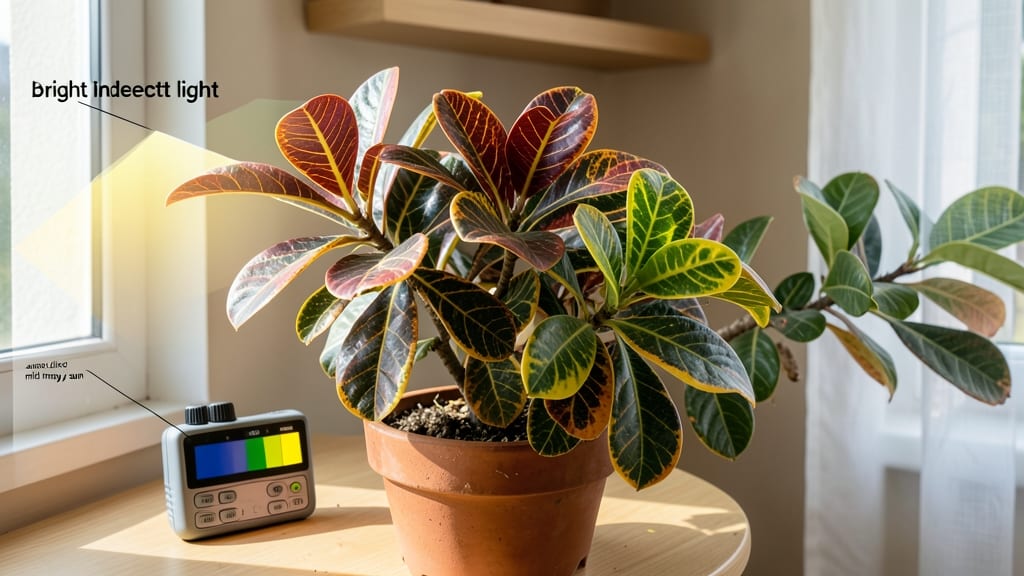
If your croton plant’s 🌿 leaves are losing their vibrant colors and drooping, it’s likely because you haven’t quite figured out how much light does a croton plant need.
The key to keeping your croton thriving lies in understanding exactly how much light it needs—bright indirect sunlight for 6+ hours a day is non-negotiable for those stunning, multicolored leaves.
Most people assume crotons are low-maintenance, but lighting is the most important factor in their care. Too little light, and your plant will fade and weaken; too much direct sun, and you’ll risk burning those delicate leaves.
The good news? With the right setup—whether indoors or outdoors—you can create the perfect environment for your croton to flourish.
Let’s break down the ideal light conditions for your croton, including how to spot signs of over- or under-exposure and adjust your setup for year-round success. By the end, you’ll know exactly where to place your plant for bold, healthy growth—no guesswork required.
Whether you’re dealing with a dim corner at home or harsh afternoon sun, these practical tips will help you troubleshoot common light issues and keep your croton looking its best. Ready to transform your plant’s future? Let’s dive in.

Ideal light requirements for croton plants: bright indirect sun explained
Your croton plant (Codiaeum variegatum) thrives under bright indirect light, which is why it often struggles in dim corners or harsh midday sun. This tropical beauty needs 6-8 hours of sunlight daily, but the key is filtering that light to prevent leaf burn.
Think of it like a sunbather—too much direct sun causes freckles (or in this case, brown patches), while too little leaves it pale and leggy.
Indoors, place your croton near an east- or west-facing window, where morning or late afternoon sun is gentler. South-facing windows can work too, but use a sheer curtain to diffuse the intensity.
If your home lacks natural light, we’ll cover artificial solutions next—but first, let’s break down the light spectrum your croton craves.
| Light Condition | Description | Ideal For |
|---|---|---|
| Bright Indirect Light | Filtered sunlight (e.g., east/west windows, sheer curtains) | Vibrant foliage, healthy growth |
| Direct Morning Sun | 2-3 hours of sun before 10 AM | Outdoor crotons, hardy varieties |
| Low Light | North-facing windows, artificial grow lights | Last resort; causes leaf drop |
| Harsh Midday Sun | Direct sun after 11 AM (especially south windows) | Leaf burn, crispy edges |
Outdoors, your croton plant can handle partial shade (30-50% shade cloth) in hot climates, but it still needs dappled sunlight to maintain its signature colorful foliage. Avoid placing it under the scorching afternoon sun—this is when most light-related damage occurs.
Instead, mimic its natural habitat under tropical forest canopies, where light filters through leaves.
Here’s how to spot the perfect spot: Hold your hand near the plant. If you can easily read a book but still see shadows, it’s bright indirect light. If your hand casts a sharp shadow, move the plant back—direct sun is too intense.
For indoor growers, rotate your croton quarter-turns weekly to ensure even light exposure on all sides.
Watch for these tell-tale signs of light stress: Yellowing leaves mean too much light, while stretched, pale stems signal insufficient light. Brown patches on leaves? That’s sunburn, and it’s irreversible—so act fast by moving the plant to a shadier location.
Pro tip: If your croton’s leaves start dropping, it’s often a cry for better light conditions.
Seasonal changes also affect light needs. In winter, when daylight is shorter, supplement with a grow light for 12-14 hours daily to prevent leggy growth. Conversely, in summer, watch for heat stress—if your croton’s leaves feel crispy to the touch, it’s getting too much direct sun.
A simple mist spray can help, but relocating is the real fix.
For outdoor crotons, consider seasonal adjustments: Move potted plants to protected patios during peak summer heat, then bring them back into bright indoor light as temperatures drop. This mimics the natural light cycles of their tropical origins, keeping your plant healthy year-round. 🌿
Next, we’ll tackle indoor vs. outdoor light hacks, including how to boost low-light spaces and avoid common pitfalls like fluorescent light burnout. Stay tuned for actionable fixes to keep your croton’s leaves bold and vibrant! ☀️
Remember: The health of your croton hinges on light balance. Too little, and it languishes; too much, and it suffers. Master this, and you’ll unlock stunning foliage growth that’s the envy of every plant lover. Let’s dive into environment-specific solutions next! 🪴
Ideal light requirements for croton plants: bright indirect sun explained
Your croton plant thrives under bright indirect sunlight for at least 6-8 hours daily. This means placing it near an east or west-facing window where it gets gentle morning or afternoon sun, but avoids harsh midday rays.
Direct afternoon sun can scorch those stunning multicolored leaves, while too little light causes them to fade and lose their vibrancy.
The perfect light spot balances intensity and duration—think of it as a sunny day at the beach with a light breeze, not the intense glare of high noon. If your croton’s leaves start turning pale or stretching toward the light, it’s begging for more brightness.
Conversely, crispy brown edges or yellowing leaves signal too much direct sun.
For indoor growers, south-facing windows can work if you place your croton 3-4 feet away to diffuse the light. North-facing windows, however, often provide too little light, requiring supplemental grow lights. Outdoor crotons should be positioned under partial shade during peak summer hours to prevent sunburn.
🌿 Croton Light Requirements Summary
| Light Type | Daily Duration | Best Window | Indoor Fixes |
|---|---|---|---|
| Bright Indirect | 6-8+ hours | East/West | Rotate pot weekly |
| Direct Morning Sun | 2-3 hours max | South (filtered) | Use sheer curtain |
| Low Light | <4 hours | North | Add grow light |
Seasonal changes also affect your croton’s light needs. In winter months, shorter daylight hours mean you may need to supplement with a LED grow light for 12-14 hours daily.
During summer, move outdoor crotons to dappled shade if you notice leaves curling or developing white patches—these are classic signs of sunburn.
Pro tip: Rotate your croton’s pot every 2-3 weeks to ensure even light exposure. This prevents one side from leaning toward the window and becoming leggy.
Watch for new growth—if it’s pale or sparse, your plant needs more light. If leaves are crispy or bleached, it’s getting too much direct sun.
Remember, crotons are tropical plants that mimic their natural habitat of filtered sunlight under tall trees. Recreate that environment, and you’ll reward yourself with year-round vibrant foliage that turns heads in any room. 🌿