
How To
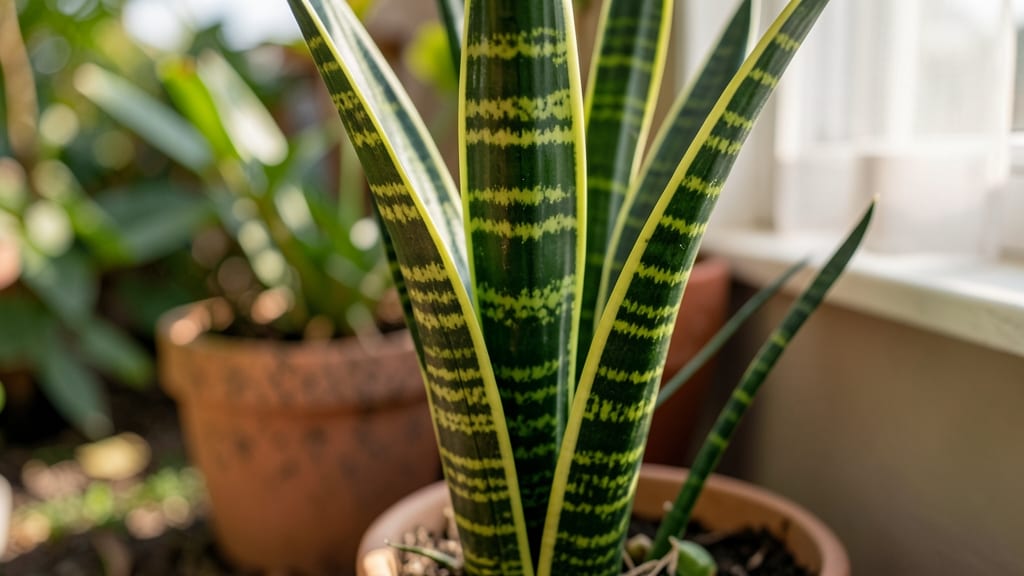
If you’ve ever wondered how tall a snake plant can grow and whether it’ll soon need a ladder to reach your ceiling, you're not alone. This resilient houseplant can grow taller than you'd expect—sometimes even 6-10 feet in ideal conditions—but most indoor varieties stay much more manageable.
The key to understanding its growth lies in the variety you've chosen. Some, like the towering 'Futura Superba,' can stretch toward the sky, while others, such as the compact 'Hahnii,' stay closer to the ground.
Whether you're dealing with a 3-foot standard or a 1-foot dwarf, knowing what to expect helps you plan your space—and your care routine.
Light, pot size, and even your watering habits play a huge role in how tall your snake plant becomes. Too much sun or a cramped container can send it shooting upward, while the right balance keeps it lush and controlled.
I'll show you how to manage its height so it stays the perfect size for your home.
Ready to learn how to keep your snake plant thriving without it taking over your living room? Let's dive into the factors that shape its growth and the simple tricks to keep it at your ideal height.

Natural height limits of snake plants: growth ranges by variety
Snake plants (Sansevieria trifasciata) are famous for their slow, steady growth—but their final height depends entirely on the variety and growing conditions. While some types stay compact, others can reach impressive heights, especially outdoors.
Let’s break down the natural height limits of popular varieties so you can plan your space accordingly.
The most common snake plant varieties fall into three height categories: dwarf, standard, and tall. Dwarf varieties like 'Hahnii' (also called "Bird’s Nest") rarely exceed 1-2 feet, making them perfect for small spaces.
Standard varieties like 'Laurentii' or 'Futura Superba' typically grow to 3-4 feet indoors, while outdoor specimens can stretch taller with ideal conditions.
Outdoor snake plants often surpass their indoor counterparts by 20-30% due to more sunlight, space, and nutrients. For example, a 'Moonshine' variety might hit 4-5 feet outdoors but stay around 3 feet indoors. Understanding these differences helps you set realistic expectations for your plant’s growth trajectory.
🌱
Genetics play a huge role in determining your snake plant’s height potential. For instance, 'Futura Superba' is genetically predisposed to grow taller than 'Hahnii', even under identical care conditions. If you’re growing snake plants as houseplants, container size and light exposure become critical factors in controlling height.
Light is the primary driver of vertical growth. Snake plants grown in bright, indirect sunlight will stretch taller to reach light sources, while those in low-light conditions may grow slower but bushier.
If your plant starts leaning toward a window, it’s a clear sign it needs more light—or a rotating schedule to grow evenly.
Soil quality and pot size also influence height. Root-bound plants in small containers may grow taller as they compete for nutrients, while those in larger pots with loose soil tend to develop broader, bushier foliage.
If you’re aiming to keep your snake plant compact, repotting into a wider container can encourage horizontal growth instead of vertical spikes.
Outdoor snake plants in USDA Zones 9-11 can grow significantly taller due to year-round warmth and natural rainfall. In these climates, varieties like 'Futura Superba' often reach 6 feet or more, while 'Hahnii' varieties might top out at 3-4 feet.
Even in cooler zones, outdoor plants can grow taller during summer months before slowing down in winter.
If you’re growing snake plants for indoor decoration, focus on dwarf or semi-dwarf varieties like 'Hahnii' or 'Laurentii' to avoid overcrowding your space. For outdoor landscapes, taller varieties add dramatic vertical interest, especially when planted in groups or along fences.
🌿
How to control snake plant height: pruning, repotting & light tips
If your snake plant is shooting up like a skyscraper, don’t panic—you can manage its height with simple techniques. The key is understanding when and why it grows tall, then intervening early. Most varieties like Sansevieria trifasciata grow vertically when they’re root-bound or craving more light.
Start by checking your pot size. If roots are circling the bottom, they’re signaling it’s time to repot into a wider container. A larger pot encourages bushier growth instead of a single tall spike. I repot mine every 2-3 years or when roots peek through drainage holes.
Here’s how to prune for control: Use clean, sharp scissors to trim overlong leaves at the base. Cut just above a leaf node (the bumpy part where new growth emerges).
This redirects energy to side shoots instead of height. Just avoid cutting more than 1/3 of the leaf at once.
⚠️ Warning: Over-Pruning Risks
Cutting too aggressively can stress your plant and stunt growth. Never remove more than 1-2 leaves per pruning session, and always use sterilized tools to prevent disease. If leaves turn yellow after pruning, you’ve gone too far!
Light plays a huge role in height control. Place your snake plant near an east-facing window for gentle morning sun—this prevents the stretched growth caused by weak indoor lighting. Avoid south-facing windows unless you have sheer curtains, as direct sun can scorch leaves.
For outdoor snake plants, height depends on your climate. In USDA Zone 9+, they can grow 6-8 feet tall outdoors, but indoors, they rarely exceed 4 feet without intervention.
If you notice leggy growth, move the plant closer to light or rotate the pot weekly for even exposure.
Finally, fertilize lightly in spring (once every 6-8 weeks) with a balanced 10-10-10 mix. Too much fertilizer = more height, not bushiness. I use half the recommended dose to keep my snake plants compact and healthy.