
Plants
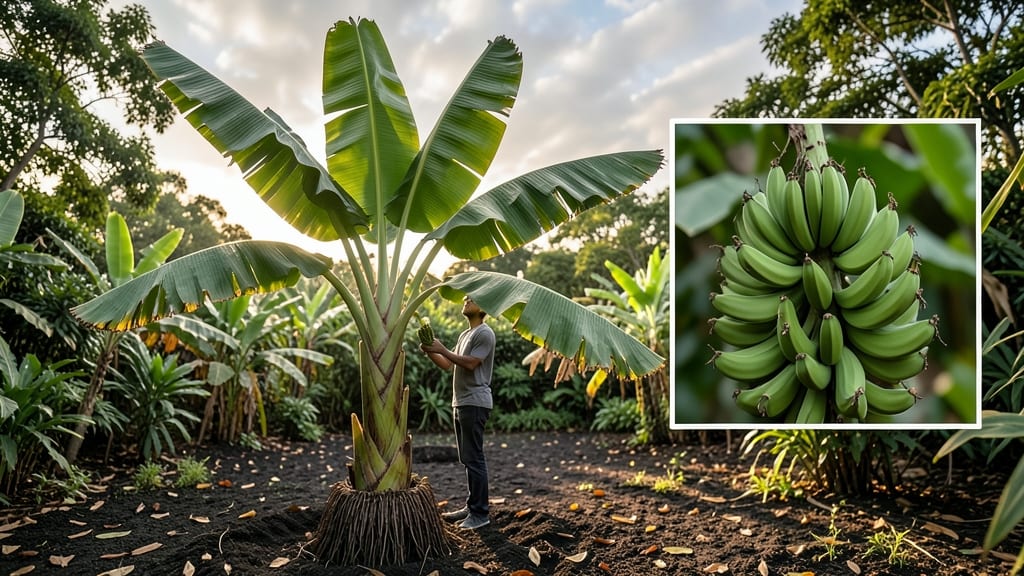
If you've ever wondered how tall does a banana plant grow, the answer might surprise you—these tropical giants can stretch from waist-high dwarfs to towering 25-foot trees. Whether you're dreaming of a backyard harvest or a container-friendly 🍌 variety, the right choice makes all the difference.
Dwarf banana plants stay manageable at 6-10 feet, perfect for small spaces or pots, while standard varieties reach 15-25 feet—think two-story heights. The key? Your climate (zones 10-12 ideal) and care routine determine how quickly they skyrocket.
Curious how to pick the perfect size for your garden? I’ll break down dwarf vs. giant growth patterns and share pro tips for keeping them in check—whether you’re pruning a giant or coaxing fruit from a compact pot.
Let’s dive into the varieties that fit your space, from 6-foot dwarfs to 30-foot giants, and how to nurture them without losing your yard to a jungle!

Banana plant height by variety: from dwarf to giant sizes
Banana plants are often mistaken for trees, but they’re actually giant herbs with no true wood—yet some varieties can grow as tall as a two-story house.
The height of your banana plant depends entirely on its variety, with dwarf types reaching just 6-10 feet and commercial giants soaring to 20-30 feet. Understanding these differences will help you choose the perfect plant for your space and climate.
Most home gardeners opt for dwarf or semi-dwarf varieties, which are easier to manage in containers or small yards. These plants typically mature in 1-2 years and produce fruit at a more accessible height, making them ideal for urban gardeners or those with limited outdoor space.
Meanwhile, standard and giant varieties can take 3-5 years to reach full height and require more room to thrive.
Here’s a quick look at how banana plant heights compare across popular varieties, including their mature sizes and fruit production timelines:
The Dwarf Cavendish is the most popular choice for home gardeners because it fits neatly into large containers (20+ gallons) while still producing commercial-sized bananas.
In contrast, the Gros Michel, once the dominant variety in global trade, can grow 30 feet tall and requires tropical climates with year-round warmth. If you’re in USDA Zone 10 or higher, you can grow these giants, but they’ll need staking or trellises to support their weight.
Height isn’t just about space—it also affects fruit production. Taller varieties like Gros Michel produce larger bunches of bananas, but they take years to mature. Dwarf varieties, while smaller, fruit faster and more frequently, making them perfect for continuous harvests in home gardens.
For example, a Lady Finger banana plant might yield 3-5 bunches per year, while a giant variety could produce just 1-2 bunches in its first 3 years.
Climate plays a huge role in how tall your banana plant grows. In tropical zones (USDA 10-12), banana plants grow continuously and can reach their full height within 2-3 years.
However, in cooler microclimates (like Zone 9 with winter protection), growth slows, and plants may stay shorter and bushier. If you’re in a warmer zone, expect your plant to grow 3-5 feet per year until it matures.
One common misconception is that banana plants grow straight up like trees. In reality, their pseudo-stems (made of tightly packed leaves) lean slightly as they grow taller, which is why staking or pruning becomes essential for varieties over 12 feet tall. Without support, the
Do banana plants keep growing after harvesting fruit?
Banana plants are fascinating because they don’t grow like traditional trees—they’re actually herbaceous giants with no wood. After harvesting fruit, you might wonder: does the plant keep growing? The short answer? Yes, but differently. Once a banana plant produces fruit, it enters its final growth phase before dying back.
However, the good news is that new pseudostems (those thick, layered stems) often sprout from the base, ready to replace the old one.
Think of it like a one-time bloom for perennials—banana plants focus all their energy on producing fruit, then regrow from the roots. This cycle means you can enjoy multiple harvests from a single planting over years, as long as you provide the right care.
In tropical climates (zones 10-12), this process repeats annually, while cooler zones may see slower regrowth.
The key to understanding height after harvest lies in the plant’s lifecycle stages. A mature banana plant will reach its full 15-25 feet height during fruiting, but after harvesting, the old pseudostem collapses.
Meanwhile, the suckers (baby plants) at the base start growing—these will eventually reach similar heights if given time and proper care.
Here’s the catch: pruning matters. If you remove the old pseudostem too early, you might stunt the new growth. Wait until it naturally yellows and dries before cutting it down.
This allows nutrients to flow back into the roots, fueling the next generation of plants. Without this step, your banana patch could struggle to rebound.
🌱 Pro Tip: Use the old pseudostem as mulch around the base of your new suckers. It breaks down quickly, adding nutrients to the soil and encouraging faster growth for the next cycle.
In cooler climates, banana plants may go dormant after fruiting, slowing growth until warmer weather returns. This is normal—don’t panic if your plant seems to shrink over winter. With the right winter care (like mulching and reduced watering), it’ll bounce back stronger than ever when spring arrives.
So, while your banana plant won’t keep growing taller indefinitely, its root system ensures a steady supply of new shoots. This means with patience and care, you can enjoy fresh bananas year after year—even if the individual plants themselves have a limited lifespan.
💡 Key Takeaway: Banana plants are not perennial woodies but monocarpic (they die after fruiting). However, their regrowth from suckers makes them feel like perennials. Manage height by pruning old stems and nurturing new growth for a continuous harvest.