Plants
Timing your 🥬 cabbage planting in Michigan can feel like solving a puzzle—get it wrong, and you’re left with bitter leaves instead of crisp heads. Michigan’s 5b-6b climate throws a curveball with unpredictable frosts, but nailing the March-April or July-August windows is your ticket to a bumper harvest.
I’ve grown cabbage in Michigan for years, and the difference between a flop and a feast often comes down to one key factor: knowing when to plant. Too early? Your plants bolt before forming heads.
Too late? Frost steals your harvest before it matures. The secret lies in reading frost dates like a pro—and I’ll show you exactly how.
Whether you’re a first-time gardener or a seasoned green thumb, this guide cuts through the guesswork. You’ll learn the perfect weeks to plant for spring and fall crops, how to adjust for Michigan’s regional quirks, and why some varieties thrive where others fail.
Let’s get your cabbage off to the right start.
No more wasted seeds or disappointed harvests—just crisp, flavorful heads from your garden. Ready to master the Michigan cabbage calendar? Let’s dive in.
Michigan cabbage planting windows by frost dates: avoid bolting and frost damage
Michigan’s frost dates are the backbone of successful cabbage planting, but they vary dramatically across Zone 5b-6b regions. The Upper Peninsula faces later springs and earlier falls compared to Southern Michigan, meaning your planting window shifts by 3-4 weeks.
For example, Detroit’s last frost is typically April 15, while Marquette’s lingers until May 15. These differences force gardeners to adjust their schedules—or risk bolting (premature flowering) or frost damage.
Cabbage thrives in cool weather, so timing is about striking a balance: planting too early exposes seedlings to soil crusting or rot, while late planting risks heat stress that triggers bolting. My strategy? Plan for two planting windows: early spring and late summer.
The early window targets spring harvests, while the late window ensures fall crops mature before frost. Let’s break it down by region and method.
🌱 Comparison Table: Michigan Cabbage Planting Windows by Region
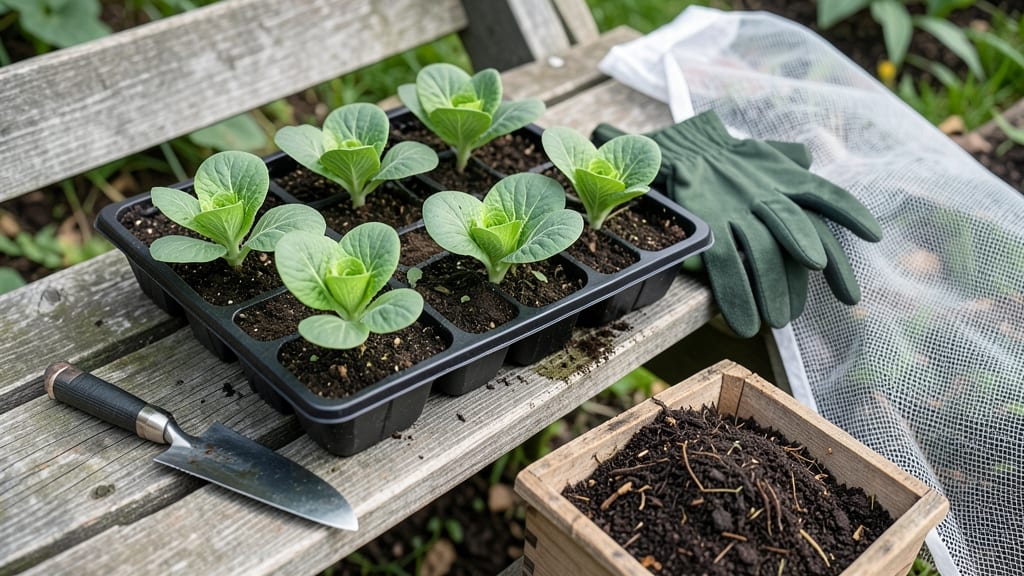
For transplants, start seeds indoors 4–6 weeks before your region’s last frost date.
For example, Southern Michigan gardeners should begin seeds by February 15 for early spring planting. Direct sowing is riskier but works if you plant after soil reaches 45°F and use seedling protection like cloches or floating row covers.
This method is ideal for gardeners who missed the transplant window or want to save money.
Fall cabbage is a game-changer for Michigan gardens, extending harvests into October or November with proper timing. Plant transplants 8–10 weeks before your first frost—so if frost hits October 15, aim for July 15–August 1.
Direct sowing in late summer (August) gives you a 60–70-day window to harvest before frost. Pro tip: Choose frost-tolerant varieties like ‘Red Express’ or ‘Golden Acre’ for fall, as they handle cooler temps better.
Bolting is the #1 enemy of Michigan cabbage gardeners, and heat stress is the usual culprit. To prevent it, avoid planting in summer’s peak (June–July) unless you’re using shade cloth or succession planting. Instead, focus on early spring or late summer windows.
If you’re in a hot microclimate (like urban Detroit), opt for shorter-day varieties or provide afternoon shade. Even a 10°F temperature spike above 80°F can trigger bolting.
Michigan’s soil temperature is non-negotiable for cabbage success. Use a soil thermometer to confirm 45–50°F before planting. Cold soil slows germination and invites damping-off disease. In cooler regions (like the UP), wait until May 10–20 for direct sowing, even if the air feels warm.
Raised beds warm up faster than in-ground soil, giving you a 2–3 week head start in spring. For fall crops, soil temps drop quickly—plant by August 15 to ensure heads mature before frost.
Succession planting is your secret weapon for continuous harvests in Michigan. Instead of one big planting, stagger transplants every 2–3 weeks from March to May for spring, or July to August for fall. This ensures you’re always harvesting fresh, firm heads rather than facing a glut all at once.
For example, plant half your transplants in March, another third in April, and the final third in early May. This method also minimizes bolting risk by spreading out the heat exposure.
Don’t overlook microclimates in your garden. A south-facing wall or urban heat island can create pockets that are 5–10°F warmer than the rest of your yard. Plant heat-sensitive varieties like ‘Early Jersey Wakefield’ in these spots for earlier harvests.
Conversely, low-lying areas may frost later in spring—use cold frames or row covers to extend the season. Always scout your garden in March to identify these microclimates before planting.
Finally, Michigan’s unpredictable weather means you need a backup plan. Keep row covers or frost blankets on hand for late frosts, especially in May or September. For fall crops, consider a mini greenhouse or hoop house to push harvests into November.
The key is flexibility—adjust your schedule based on real-time conditions, not just averages. With these strategies, you’ll turn Michigan’s fickle climate into your cabbage-growing advantage.
5 Critical factors that determine your cabbage planting schedule in Michigan
Michigan’s Zone 5–6 climate throws curveballs like unpredictable frost dates and soil temperature swings, forcing me to adjust my cabbage planting plans every year. The 5 key factors below will help you pinpoint the perfect window for your garden’s microclimate—whether you’re in Detroit, Traverse City, or the Upper Peninsula.
First, soil temperature is non-negotiable: cabbage seeds need 45–50°F soil to germinate. In Michigan, this usually means waiting until mid-April to early May for spring plantings. Use a soil thermometer—don’t guess! I’ve seen seeds rot in 40°F soil because I rushed planting.
Your last frost date is the anchor for timing, but Michigan’s 3-region frost variations complicate things. Southern Michigan’s average last frost is April 15, while the UP can linger until May 10. Check your local Almanac frost map and plant 4–6 weeks before that date for spring cabbage.
Don’t overlook cabbage variety maturity—it’s the difference between a 60-day harvest (like ‘Early Jersey Wakefield’) and a 100-day one (like ‘Hubbard’). Fast varieties give you flexibility for late starts, while slow ones need early planting. I always cross-reference maturity dates with my frost calendar to avoid bolting.
Next, microclimates matter: Urban gardens in Ann Arbor may warm up faster than rural fields near Lansing. Notice how concrete absorbs heat and extends the growing season by 1–2 weeks in city plots.
I test my microclimate by planting a test row in March—if it survives, I know I can push my schedule earlier.
Finally, fall planting requires a different math: start seeds 8–10 weeks before your first frost (usually July 1–15 in Michigan). Use row covers to buy time if frost sneaks up early.
I’ve had success with ‘Red Express’ maturing just before hard frost—its 70-day cycle fits perfectly in Michigan’s short fall window.
Pro tip: Bookmark the Michigan State University Extension frost tool—it adjusts for your ZIP code and gives 10-year averages for reliability. My 2023 late frost in May taught me to always have backup row covers on hand for seedlings.
- 🌡️ Soil temp: Wait for 45–50°F (mid-April–early May). Use a thermometer!
- ❄️ Last frost: Plant 4–6 weeks before (varies by region: April 15–May 10).
- ⏳ Variety maturity: Match days-to-harvest with your frost window (e.g., 60-day vs. 100-day).
- 🏙️ Microclimate: Urban areas warm 1–2 weeks earlier than rural zones.
- 🍂 Fall planting: Start seeds 8–10 weeks before first frost (July 1–15). Use row covers!
Remember: Succession planting is your secret weapon for continuous harvests. In Michigan, I stagger plantings every 2 weeks from April through July to keep cabbage on the table from June to October. Start with fast varieties, then move to slower ones as the season progresses.
When in doubt, consult your local Cooperative Extension office—they’ve got decades of regional data to back up your planting decisions. And always keep a journal of your own trials: I’ve learned more from my failed early-March experiments than any guidebook could teach.