
Plants
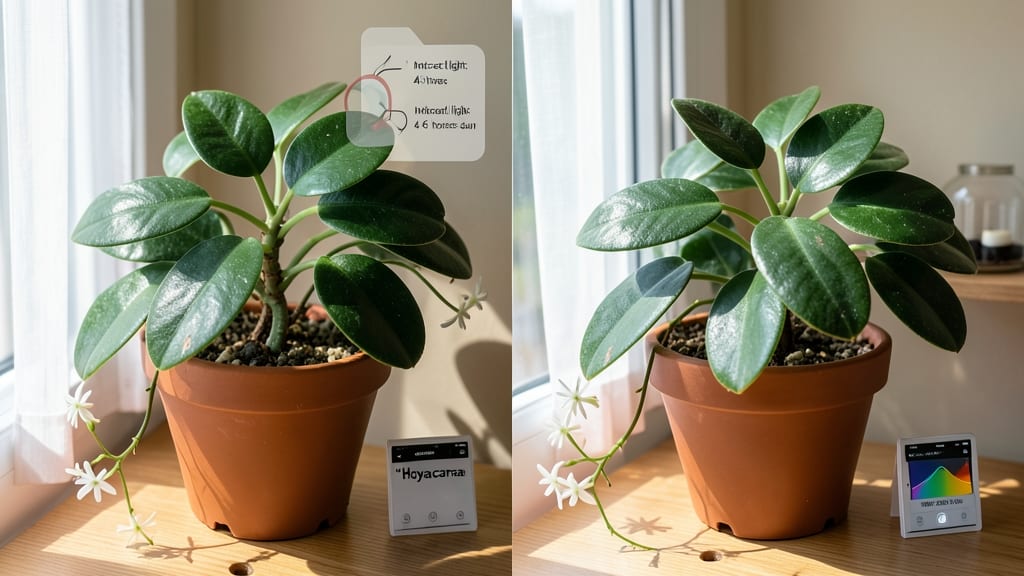
If your Hoya 🌿 plant looks sad—leggy, pale, or struggling to bloom—chances are, you’re getting how much light does a Hoya plant need wrong. This tropical vine thrives on bright indirect sunlight, but most people either underestimate or overestimate its needs, leading to frustration.
The good news? With a few simple adjustments, you can transform that struggling plant into a lush, flowering beauty.
Hoyas aren’t picky, but they do need the right balance—too little light, and they stretch desperately; too much, and those gorgeous leaves crisp at the edges. The key lies in mimicking their natural habitat under the dappled forest canopy.
I’ll show you exactly where to place your plant (hint: east-facing windows are ideal) and how to supplement light when natural sources fall short.
Whether you’re dealing with dim office spaces or harsh afternoon sun, I’ve got practical solutions to keep your Hoya happy year-round. No guesswork—just proven strategies to help your plant flourish, no matter your lighting setup. Let’s fix this together.
From recognizing the subtle signs of light stress to choosing the best artificial grow lights, you’ll learn how to give your Hoya exactly what it craves. Ready to see those vines thicken, leaves deepen in color, and maybe even those coveted blooms appear? Let’s get started.

Hoya light requirements: the ideal bright indirect sunlight spectrum explained
Hoyas thrive in bright indirect sunlight, which mimics their natural habitat under forest canopies. Unlike sun-loving plants, Hoyas burn easily in direct midday rays, yet they need more light than shade-loving varieties like pothos.
The key is finding that sweet spot where leaves stay vibrant but never bleach or crisp.
Think of it like a coffee shop’s patio—bright enough to read comfortably, but shaded from harsh afternoon sun. Hoyas crave 4-6 hours of filtered light daily, with morning sun being the gentlest. This balance prevents leggy growth (a classic sign of light deprivation) while avoiding sunburn.
Here’s how to visualize it: If you hold your hand near your plant, the light should feel warm but not scorching. Direct sun creates a hotspot that feels like resting your hand on a car dashboard—too intense!
Hoyas evolved under dappled sunlight, so recreating that environment is crucial for their health.
| Light Condition | Ideal Hours | Hoya’s Reaction | Best For |
|---|---|---|---|
| Low Light (<30%) | Indirect light only | Leggy growth, pale leaves | Survival only |
| Medium Light (30-50%) | 4-6 hours filtered | Healthy growth, variegation | Optimal blooming |
| Bright Indirect (50-70%) | 6+ hours filtered | Dark green leaves, slow growth | |
| Direct Sun (70%+) | 2+ hours unfiltered | Brown patches, crispy edges | Avoid entirely |
The shadow test is my go-to method for checking light levels. Place a small object (like a pencil) near your plant at noon. If the shadow is sharper than your hand’s width, the light is too direct.
For perfect Hoya lighting, aim for a soft, diffused shadow—like the one cast by a sheer curtain.
Interestingly, Hoyas need blue and red light spectrums for photosynthesis, but too much blue can stress them. That’s why east-facing windows (morning sun) are ideal—they provide gentle blue light without the harsh afternoon red. West windows can work, but use a sheer curtain to filter the intensity.
Outdoors, Hoyas love partial shade under trees, where they receive dappled sunlight. If growing outside in summer, place them where they get morning sun and afternoon shade. In winter, they’ll tolerate more direct light since the sun is weaker, but never let them bake in full sun.
Pro tip: Rotate your Hoya quarter-turn weekly to ensure even growth. Plants stretch toward light sources, so consistent rotation keeps vines full and prevents lopsided development. This is especially important for variegated Hoyas, which need balanced light to maintain their stunning patterns.
Remember, Hoyas are tropical vines, not desert plants. They’re used to gentle light conditions, not the harsh glare of a greenhouse. By mimicking their natural environment, you’ll reward them with glossy leaves, robust vines, and even fragrant blooms—all signs of a happy Hoya.
🌿
Signs your Hoya isn’t getting enough (or too much) light
Your Hoya plant speaks volumes through its leaves—pay attention to these visual cues that reveal its light struggles. Leggy growth with sparse leaves means it’s stretching desperately for more light, while dark green leaves losing variegation patterns signal insufficient brightness.
These signs often appear when Hoyas sit too far from windows or under artificial lights that lack the right spectrum.
On the flip side, crispy brown edges or bleached white patches on leaves are classic signs of sunburn from direct midday rays. Even tropical Hoyas can’t handle harsh 12 PM sunlight, so watch for these burn marks near south- or west-facing windows.
The good news? Adjusting light exposure can reverse these issues before they become permanent.
🌿
| Symptom | Cause | Solution |
|---|---|---|
| Leggy, sparse vines | Too little light | Move to east or north window or add grow light |
| Dark green leaves (variegation loss) | Low light stress | Increase brightness gradually over 2-3 weeks |
| Crispy brown leaf edges | Too much direct sun | Use sheer curtain or move 3+ feet away |
| Yellowing leaves | Overwatering + poor light | Reduce watering and improve light immediately |
| Small, dull flowers | Inconsistent light | Provide stable bright indirect light year-round |
If your Hoya’s leaves start drooping suddenly, it might be a light shock from moving it too quickly. Always acclimate plants to new light conditions over 5-7 days by gradually increasing exposure.
For example, move your Hoya 6 inches closer to its light source every 2 days until it reaches the ideal spot.
Pro tip: Rotate your plant every 2-3 weeks so all sides get even light. Hoyas grow toward their light source, and uneven exposure can cause lopsided growth or weak stems. This simple habit keeps your vines compact and healthy while preventing leggy, floppy stems that can’t support themselves.
🪴
Remember, Hoyas are forgiving plants—they’ll bounce back from mild light issues if you catch the signs early. But chronic underlighting or sunburn can weaken the plant permanently, making it more susceptible to pests and diseases.
Keep an eye on these visual cues, and your Hoya will reward you with glossy leaves and stunning blooms for years to come.