
Plants
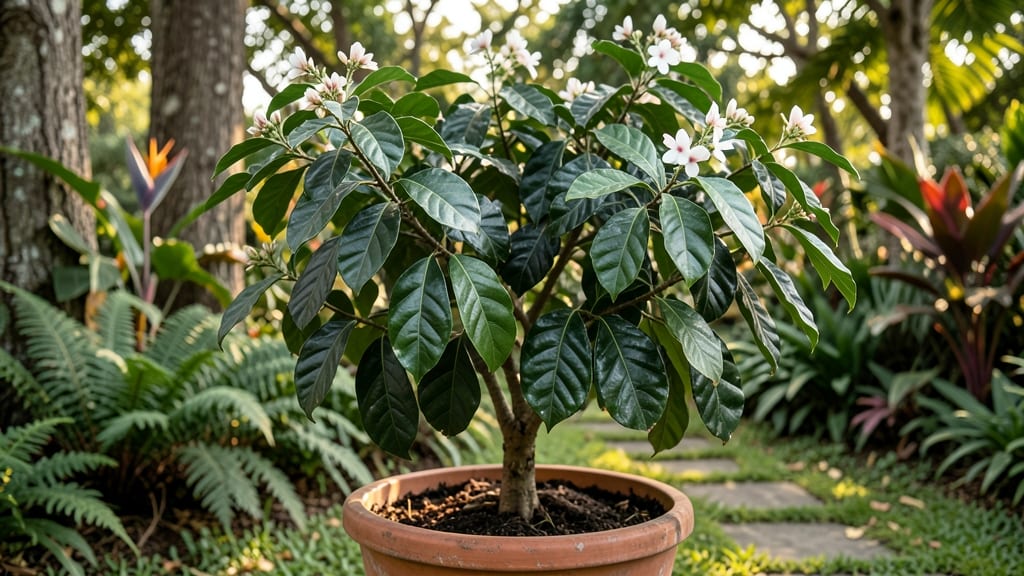
If you’re wondering how tall your ☕ coffee plant could grow, the answer might surprise you—some varieties stay as compact as a small shrub while others tower like a shade tree.
Whether you’re dreaming of a patio-sized coffee bush or a full-grown tree in your backyard, understanding these height differences is the first step to planning your perfect coffee garden.
Most coffee plants fall into two main categories: dwarf varieties that max out around 6 feet, and standard trees that can reach 30 feet or more.
The variety you choose—like the popular Coffea arabica or the hardier Coffea canephora—plays a huge role in determining height, but so do growing conditions like pruning, climate, and even container size.
For home gardeners, dwarf coffee plants are a game-changer, fitting neatly into pots or small gardens while still producing delicious beans. But if you’re in a tropical or subtropical USDA Zone 10-12, you might opt for a taller variety to create natural shade or even a small coffee grove.
The key is knowing which type suits your space and goals.
Ready to learn how to control your coffee plant’s growth—whether you want a bushy, manageable size or a towering tree? I’ll break down the best varieties for small spaces, how pruning shapes height, and whether container gardening is even possible. Let’s get started!

Coffee plant height by variety: dwarf vs tall coffee trees explained
Coffee plants come in a stunning range of sizes, from compact dwarf varieties perfect for balconies to towering shade trees that dominate tropical landscapes.
The height of your coffee plant depends almost entirely on its genetic variety—whether you're growing Arabica or Robusta—and how you manage its growth over time.
For example, a standard Bourbon Arabica can reach 20-30 feet in ideal conditions, while a dwarf 'Nana' Arabica stays neatly between 3-6 feet, making it ideal for container gardening.
Understanding these differences is crucial for space planning and harvest management. Tall varieties need ample room to spread their canopy and roots, while dwarf types thrive in small pots or urban gardens.
Even within the same species, pruning techniques and growing conditions can dramatically alter a plant's mature height. For instance, a Robusta coffee plant, known for its hardiness, typically grows 15-25 feet tall but can be pruned to maintain a 6-10 foot bush for easier harvesting.
| Variety | Mature Height | Growth Habit | Ideal Spacing | Best For |
|---|---|---|---|---|
| Dwarf Arabica ('Nana') | 3-6 ft | Bushy, compact | 1-2 ft apart | Containers, patios, balconies |
| Semi-Dwarf Bourbon | 10-15 ft | Upright, moderate spread | 8-10 ft apart | Small gardens, shade gardens |
| Standard Typica Arabica | 20-30 ft | Tall, wide canopy | 20-30 ft apart | Large properties, agroforestry |
| Robusta ('Catimor') | 15-25 ft | Tall, dense foliage | 10-15 ft apart | Commercial farms, windbreaks |
| Dwarf Catimor | 6-10 ft | Bushy, robust | 3-5 ft apart | Urban gardens, small farms |
If you're growing coffee plants in containers, even tall varieties like Typica Arabica can be managed to stay under 10 feet with regular pruning and root restriction.
The key is to choose a dwarf or semi-dwarf variety from the start, as these are bred to stay smaller without sacrificing coffee yield per square foot.
For example, a 6-foot dwarf Arabica in a 15-gallon pot can produce 1-2 pounds of cherries annually, while a 20-foot Typica in the ground yields 5-10 pounds but requires a large property.
Another critical factor is the growth rate of coffee plants. In their first year, most varieties grow 2-4 feet tall when potted, but outdoor plants can shoot up 6-10 feet in ideal tropical conditions.
By year three, an unpruned Arabica may reach 10-15 feet, while a Robusta could surpass 20 feet if given ample space and nutrients. This rapid early growth is why pruning young plants is essential to control height and encourage bushier, more productive growth.
For home gardeners in temperate climates, where coffee plants are often grown as houseplants or in greenhouses, height control becomes even more important. Without enough light or space, coffee plants may grow leggy and weak, reaching 8-12 feet tall in search of sunlight.
To prevent this, use <
Factors that influence coffee plant height: pruning, climate, and care
Your coffee plant’s final height isn’t set in stone—it’s shaped by how you care for it and where you grow it. Pruning is the #1 way to control height, especially if you’re working with a standard variety that could reach 30 feet.
Regular trimming encourages bushier growth, while letting branches grow freely can lead to a taller, more tree-like structure. For example, if you want a 6-foot patio bush, prune aggressively every 3-4 months to shape the plant.
Climate plays a huge role too. Coffee plants thrive in tropical or subtropical zones (USDA 10-12), where they naturally grow taller due to year-round warmth and humidity. But in cooler climates, growth slows dramatically, often resulting in shorter, more compact plants.
If you’re growing coffee indoors, expect slower height increases unless you supplement with grow lights to mimic tropical conditions.
Soil and fertilizer also impact height. Nutrient-rich, well-draining soil promotes faster growth, while balanced fertilizers (10-10-10 NPK) encourage even height development. Over-fertilizing with nitrogen can lead to excessive leafy growth at the expense of height, so always follow a feed-light-feed schedule during the growing season.
In my own garden, I’ve seen coffee plants in compost-amended soil grow 2-3 feet taller in a single year compared to those in standard potting mix.
Container size is another game-changer. Coffee plants in large pots (15+ gallons) can reach 10-15 feet over time, while those in small containers (5-gallon or less) stay under 6 feet due to root restriction.
If you’re growing in pots, choose a wide, shallow container to encourage lateral growth rather than height. For outdoor plants, spacing matters too—standard trees need 15-20 feet between plants to avoid competition, while dwarf varieties can thrive in 5-6 feet of space.
🌱 Pro Tip: If you’re growing coffee for shade, let it reach its natural height (10-30 ft) and prune only to remove dead or crossing branches. But if you want a compact, bushy plant, prune young shoots regularly and pinch back tips to encourage branching.
I’ve even seen coffee plants trained as espalier along fences, keeping them under 8 feet while maximizing yield.
- 🔹 Prune aggressively every 3-4 months for compact bushes (3-6 ft).
- 🔹 Use large containers (15+ gallons) for taller growth (10-15 ft).
- 🔹 Pinch back tips to encourage bushier growth and slower height increase.
- 🔹 Grow in tropical climates (USDA 10-12) for natural tall growth (20-30 ft).
- 🔹 Avoid over-fertilizing with nitrogen—it promotes leaves, not height.
One mistake I see often is assuming all coffee plants grow the same way. Arabica varieties (like Bourbon) tend to stay 10-15 feet tall, while Robusta (like Catimor) can reach 20-30 feet if unpruned.
If you’re in a small space, opt for dwarf varieties or prune standard types early to keep them manageable. For example, my ‘Nana’ Arabica stays under 5 feet with minimal pruning, while my unpruned Typica is now 12 feet tall after 5 years.
Finally, remember that height isn’t everything. Even a 6-foot coffee bush can produce high-quality beans if given the right care. The key is balancing your space, climate, and pruning goals.
Whether you’re aiming for a patio-sized shrub or a shade-providing tree, understanding these factors will help you grow the perfect coffee plant for your needs. ☀️