
How To
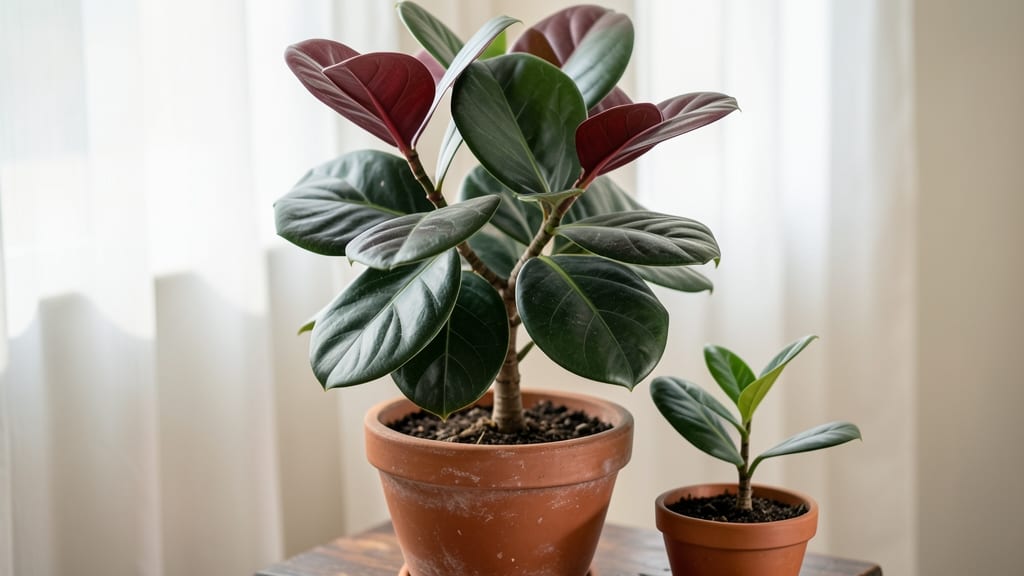
If you’ve ever glanced at your Rubber Plant 🌿 and wondered how tall this plant can grow, you’re not alone. These striking houseplants can grow surprisingly tall—sometimes reaching 10 feet indoors with the right conditions—but their size is far from inevitable.
The key to managing its height lies in understanding how light, pruning, and even your pot size influence growth. Without proper care, that lush Ficus elastica could quickly outgrow its welcome, turning your living room into a jungle.
But with a few simple strategies, you can keep it at a manageable 3-6 feet while still enjoying its bold leaves and air-purifying benefits.
Let’s break down exactly how tall your Rubber Plant could grow—and more importantly, how to control its size. Whether you’re dealing with a leggy plant or just want to prevent future overgrowth, these tips will help you maintain the perfect height for your space.
From pruning techniques to light adjustments, you’ll learn the game-changer methods that keep your plant thriving without taking over your home. Ready to transform that towering threat into a stylish statement piece?

Natural height limits of rubber plants: how tall they grow indoors
Your rubber plant (Ficus elastica) is a fast-growing beauty, but its final height depends on several factors—including its variety, light exposure, and care routine. On average, indoor rubber plants reach 6 to 10 feet tall, though some dwarf varieties stay under 3 feet.
Without proper maintenance, they can easily outgrow your space, becoming a vertical jungle rather than a stylish statement piece.
Understanding these height ranges helps you plan for growth. For example, a standard rubber plant in ideal conditions can hit 10 feet in 3–5 years, while a dwarf variety like 'Robin Hood' maxes out around 3–4 feet.
The key is balancing their natural growth with your space and aesthetic goals.
Here’s how their height breaks down by stage:
| Stage | Height Range | Time to Reach | Key Influencer |
|---|---|---|---|
| Seedling | 6–12 inches | 0–1 year | Genetics & light |
| Juvenile | 2–4 feet | 1–2 years | Pot size & water |
| Mature (Standard) | 6–10 feet | 3–5 years | Pruning & light |
| Mature (Dwarf) | 3–4 feet | 3–4 years | Genetics & pruning |
Light exposure is the biggest factor in determining how tall your rubber plant grows. Place it near an east or north-facing window for bright indirect light, which encourages bushier, slower growth.
Harsh direct sun can cause leaf scorch and leggy stems, while low light leads to etiolated (stretched-out) growth, making the plant grow taller but weaker.
Pot size also plays a role—root-bound plants grow faster vertically because they’re desperate for space. If you notice roots circling the bottom of the pot, it’s time to repot into a slightly larger container (just 1–2 inches wider). This helps redirect energy toward leaf production instead of upward growth.
Another critical factor is pruning frequency. Regular pruning—especially in early spring or summer—encourages branching and keeps your plant compact. Without pruning, rubber plants can grow up to 2 feet per year, turning your living room into a vertical forest in no time.
Even a simple topping cut can transform a leggy plant into a fuller, bushier specimen.
Outdoor rubber plants grow even taller—sometimes reaching 15–20 feet in tropical climates—because they have unlimited space and more sunlight. However, most indoor gardeners deal with the 6–10 foot range, which is why understanding these limits helps you set realistic expectations and plan for growth management.
If you’re curious about how your specific rubber plant variety compares, check the leaf color and size—darker leaves often indicate a standard variety, while smaller, lighter leaves suggest a dwarf or variegated type.
Knowing your plant’s genetic potential lets you tailor care to keep it at your desired height.
For example, the 'Black Prince' variety stays compact but can still grow 6–8 feet tall indoors, while the 'Tineke' (variegated) may max out at 4–5 feet with consistent pruning. The key is observing growth patterns and adjusting care as needed.
🌿
Natural height limits of rubber plants: how tall they grow indoors
Rubber plants (Ficus elastica) are known for their dramatic growth, but their final height depends on several factors. Under ideal conditions, they can reach 6 to 10 feet indoors, though some varieties stay shorter.
The key is understanding how light, pot size, and pruning influence their growth trajectory.
For most standard rubber plants, expect 3–5 feet of growth per year during active seasons. Dwarf varieties like 'Black Prince' or 'Burgundy' typically max out at 3–6 feet, making them better for smaller spaces. Meanwhile, larger types like 'Variegata' can easily surpass 8 feet without intervention.
Here’s how their growth stacks up over time:
| Stage | Height Range | Timeframe |
|---|---|---|
| Seedling | 0–1 ft | 0–6 months |
| Juvenile | 1–3 ft | 6–18 months |
| Mature (Standard) | 6–10 ft | 2–5 years |
| Mature (Dwarf) | 3–6 ft | 3–5 years |
Light exposure is the biggest factor in height control. Rubber plants stretch dramatically toward low-light windows, a condition called "etiolation." Place yours near an east-facing window for balanced growth, or supplement with a grow light if natural light is limited.
Without enough light, expect leggy, weak stems that grow taller but weaker.
Pot size also plays a role. Root-bound plants grow taller faster because they’re desperate for space. Upgrade to a 1–2 inch larger pot every 2–3 years to encourage bushier growth.
If you want to keep your rubber plant compact, choose a smaller pot and prune regularly to redirect energy into foliage rather than height.
Even with ideal care, rubber plants can become unruly. The good news? Their height is entirely manageable with pruning and propagation. Next, we’ll cover how to trim your plant without sacrificing its health or beauty. 🌿