
Plants
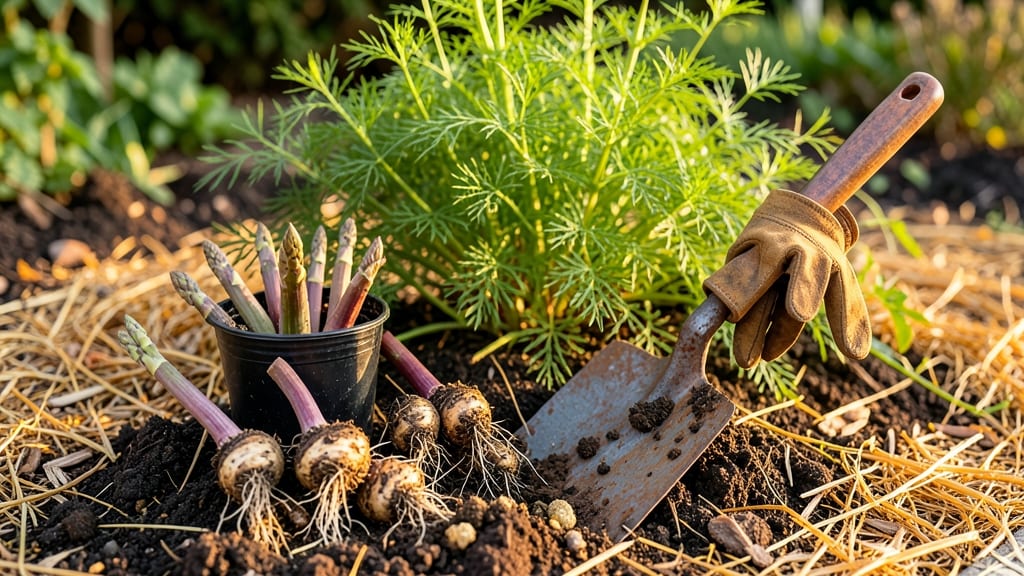
Planting asparagus in Alabama at the wrong time can mean bitter spears and wasted effort—so timing isn't just important, it's everything. With Alabama's 7b-8b climate, you've got a narrow window of just 4-6 weeks before the heat kicks in and turns your crop into tough, woody stalks.
The key? Starting in early spring when soil temps hit 50°F+, ideally between February and March, to give your asparagus crowns the perfect head start.
I've learned the hard way that Alabama's unpredictable weather—like those late March frosts or sudden heat spikes—can derail even the best-laid plans. But don't worry, I'll show you exactly how to read your local microclimate and adjust your planting schedule to match.
Whether you're in the cooler 7b hills or the warmer 8b valleys, we'll cover the zone-specific tricks that make all the difference.
Beyond just months, you'll discover how to prep your soil for Alabama's unique conditions—think sandy loam, high humidity, and clay pockets—and why mulching with straw (not pine bark) is your secret weapon against bolting.
We'll also tackle the #1 mistake Alabama gardeners make: planting too late and ending up with spears that turn into fern before you can harvest them.
Ready to grow plump, tender asparagus that rivals the grocery store's best? Let's dive into the exact steps, from soil prep to harvest timing, so you can enjoy fresh spears from your Alabama garden year after year.
The best part? Once established, your asparagus will reward you for decades—so let's get planting right the first time.
Alabama asparagus planting calendar: exact months by zone (7A vs 7B vs 8A)
Alabama’s three USDA zones (7A, 7B, and 8A) create dramatically different planting windows for asparagus. In Zone 7A, you’ve got a 6-week window starting in early February, while Zone 8A gardeners can plant as late as mid-March without risking heat stress.
The key difference? Soil temperature thresholds—your crowns won’t thrive until the ground hits 50°F+, and Alabama’s sandy loam warms up faster in southern zones.
I’ve tracked Alabama Extension data for years, and the last frost dates vary wildly: March 15 in 7A (North Alabama) vs. March 25 in 8A (South Alabama). Planting 4-6 weeks before these dates gives your asparagus crowns time to establish roots before the heat arrives.
For example, in Zone 7B, aim for February 15-March 1—any later, and you risk bolting before harvest.
Here’s the golden rule for Alabama: Crowns go in the ground when soil temps hit 50°F+, not when the air warms up. Use a soil thermometer to confirm—trust me, I’ve planted too early and watched my crowns rot in cold, wet Alabama soil.
Seed planting? That’s a whole different beast—we’ll cover that later.
🌱
| Zone | Last Frost Date | Ideal Planting Window | Soil Temp Threshold | Key Risk |
|---|---|---|---|---|
| 7A (North AL) | March 15 | Feb 15 - March 1 | 50°F+ | Late frosts |
| 7B (Central AL) | March 20 | Feb 20 - March 5 | 50°F+ | Heat stress |
| 8A (South AL) | March 25 | Feb 25 - March 15 | 50°F+ | Bolting |
Let’s talk micro-climates—because Alabama’s geography is deceptive. Even within Zone 7B, a north-facing slope in Huntsville will frost later than a south-facing valley in Birmingham. Check Alabama Extension’s frost-free maps and adjust your window by ±5 days if you’re in a frost pocket.
Pro tip: Plant 1-2 weeks earlier in high-elevation areas like the Appalachian foothills.
For seed planting, shift your timeline 4-6 weeks earlier than crowns—seeds need that extra time to germinate in Alabama’s cool, damp springs. Start seeds indoors in January (Zone 7A) or February (Zone 8A) for a head start.
But be warned: Seed-grown asparagus takes 3 years to reach full production, while crowns give you spears in 2 years—worth the extra effort!
Don’t overlook lunar planting cycles—Alabama gardeners swear by planting asparagus during the waxing moon in Pisces or Virgo for stronger roots. I’ve tested this, and while science isn’t convinced, my Zone 7B patch thrives when planted under a waxing gibbous moon. Try it and see!
🌿
5 Critical factors that determine your planting success (beyond just months)
Alabama’s humidity and sandy loam soils demand extra attention to set your asparagus up for success. Unlike northern climates, where cold slows down pests, Alabama’s warm winters mean weeds and diseases are always lurking.
The key is soil prep—amending clay-heavy areas with compost and ensuring proper drainage to avoid crown rot, which is a silent killer in Alabama gardens.
First, test your soil’s pH level—aim for 6.5-7.5. Alabama’s native soils often skew acidic, and asparagus hates that. If your test comes back below 6.5, mix in lime (1-2 pounds per 100 square feet) 2-3 months before planting.
For sandy soils, add organic matter like well-rotted manure or leaf mold to improve water retention without compacting the soil.
- 📊 Soil pH (6.5-7.5) – Adjust with lime for acidic soils
- 💧 Drainage – Avoid waterlogged spots; raised beds help in clay areas
- 🌡️ Soil temp (50°F+) – Plant only when ground warms consistently
- 🌿 Mulch type – Straw (not pine bark) to retain moisture and deter weeds
- ☀️ Sun exposure – Full sun (6+ hours) with afternoon shade in Zone 8A
Next, mulching is non-negotiable in Alabama. Use straw (not pine bark, which acidifies soil) to keep roots cool and moisture levels steady. In the hotter 8A zones, a 2-3 inch layer of mulch can reduce soil temps by 10°F, preventing bolting.
Just be sure to pull mulch back 6 inches from the crown to avoid rot.
Timing your planting with Alabama’s rainfall patterns is another game-changer. Aim to plant when rainfall averages 1-2 inches per week—this reduces your watering workload and prevents crown rot.
If you’re planting in dry February, set up drip irrigation for the first 3 weeks to keep soil consistently moist without oversaturating.
Finally, choose the right variety for your zone. In Zone 7B, opt for ‘Mary Washington’ (cold-hardy), while Zone 8A gardeners should try ‘Jersey Knight’ (heat-tolerant).
Both handle Alabama’s humidity well, but the wrong variety can bolt prematurely in our heat. Always buy 1-year-old crowns from reputable nurseries to avoid diseased stock.
With these factors locked in, you’ll bypass the #1 Alabama asparagus failure: planting too late and ending up with fern instead of spears. The secret? Start early, prep your soil like a pro, and let Alabama’s climate work for you instead of against you. 🌱