Trees
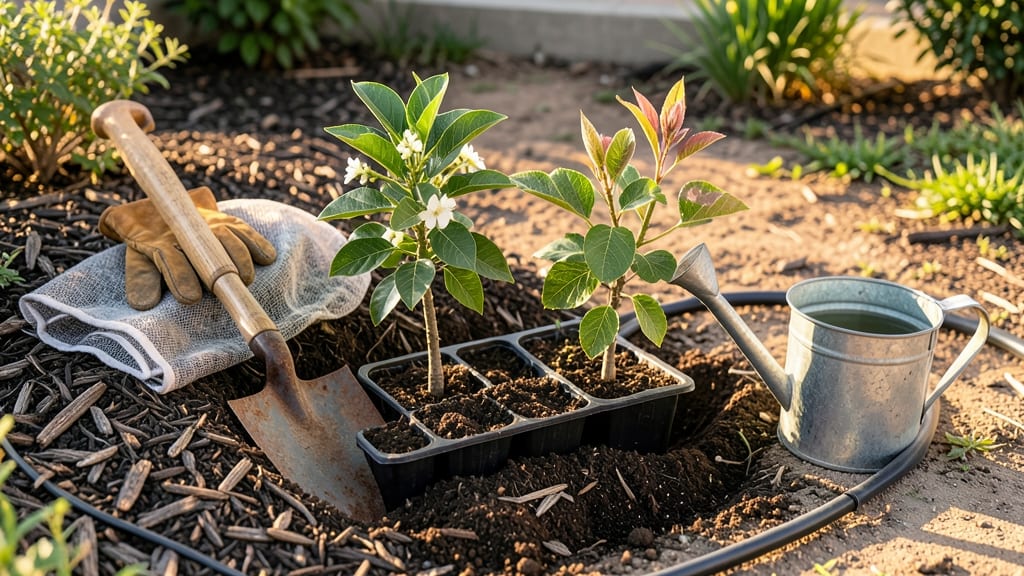
Planting fruit trees in Arizona at the wrong time can turn your $100 sapling into a sad, sun-scorched memory before it even grows roots. The key to success?
Timing your 🍎 fruit trees between November and March when cooler temps and winter rains give young roots the perfect chance to establish.
Most gardeners in USDA Zone 9b assume spring is the only option, but that desert heat can fry tender new growth. I’ve seen firsthand how planting in late winter—when daytime highs stay mild—gives trees a 30% better survival rate than summer attempts.
The secret isn’t just avoiding frost; it’s working with Arizona’s unpredictable monsoons and soil moisture cycles.
Whether you’re dropping a peach tree in Phoenix or a pomegranate in Flagstaff, the right window makes all the difference.
You’ll discover heat-tolerant varieties that thrive in your microclimate, plus pro tips to avoid the #1 mistake Arizona gardeners make: planting too late and watching their trees struggle through the summer.
Let’s break down the best months for your location, the top 3 varieties that handle Arizona’s extremes, and how to keep your new trees alive through the brutal first year—without overwatering or baking them in the sun.
Best months to plant fruit trees in Arizona by microclimate
Arizona’s diverse microclimates—from the Low Desert’s brutal heat to the High Desert’s cooler nights—mean planting times vary dramatically. In Phoenix and Tucson (USDA Zones 9b-10a), the ideal window stretches from late November to early March, when daytime temps stay below 85°F.
Higher elevations like Flagstaff (Zone 7a) shift this window to late March through May, avoiding late frosts that can kill tender young trees.
Timing isn’t just about avoiding heat—it’s about soil moisture and root establishment. Planting in winter or early spring ensures your tree taps into Arizona’s limited winter rains (or your irrigation) before summer’s scorching 110°F+ days.
Skipping this window risks transplant shock or root desiccation—two deadly enemies of young fruit trees.
Here’s the golden rule: Plant when soil temps are below 70°F and daytime highs stay under 90°F. Use a soil thermometer to check—roots struggle to establish when ground temps exceed 75°F. In monsoon-prone areas (like Yuma), aim for October planting to capitalize on early seasonal rains.
| Microclimate | Best Planting Window | Soil Prep Timing | Heat Threshold |
|---|---|---|---|
| Low Desert (Phoenix/Tucson) | Late November – Early March | October–November (6–8 weeks prior) | Daytime 85°F |
| High Desert (Flagstaff) | Late March – May | February–March (4–6 weeks prior) | Daytime 75°F |
| Monsoon Zones (Yuma) | October or Late November | September–October (capitalize on rains) | Daytime 90°F (short window) |
Soil preparation is just as critical as timing. In Arizona’s alkaline, clay-heavy soils, amend with 3–4 inches of compost and sand (for drainage) 6–8 weeks before planting. For container-grown trees, use a well-draining mix with perlite or pumice—Arizona’s soils bake hard in summer, and potted roots overheat without airflow.
Elevation matters: Every 1,000 feet gained delays planting by 2–3 weeks. At 5,000 feet (like Sedona), plant peach trees in April instead of March. Check your local frost dates—Arizona’s last frost ranges from January 15 (Low Desert) to April 1 (High Desert). Use a frost-free calendar (like the AZ Meteorological Network) to pinpoint your zone.
Container planting extends your window slightly. Since pots heat up faster, plant bare-root trees in February (instead of November) and keep them in shade cloth until roots establish. Dwarf varieties (like Citrus ‘Improved Meyer’) adapt faster to Arizona’s heat, so they’re ideal for late-winter planting in Zone 10a. Always water deeply before transplanting—Arizona’s dry air sucks moisture from roots instantly.
Avoid summer planting unless you’re in Zone 11 (Palm Springs). Even then, bare-root trees planted in June need daily shade and fogging systems to survive. Most nurseries stop selling balled-and-burlapped trees by April—plan ahead! If you miss the winter window, wait until fall (September for High Desert) and mulch heavily to retain moisture.
Pro tip: Test your soil’s pH before planting. Arizona’s soils often test alkaline (7.5–8.5), which locks out iron and zinc—critical for fruit production. Adjust with elemental sulfur (for pH <7.0) or peat moss (for pH >7.5). Citrus and figs thrive at 6.0–7.0 pH, while peaches prefer 6.0–6.5. Use a home test kit ($10) for accuracy.
Post-planting care starts immediately. Stake your tree if winds exceed 15 mph (common in April–May), and water at the base—never the leaves—to prevent fungal diseases like anthracnose. In Low Desert areas, drip irrigation is a must; hand-watering wastes 90% of water to evaporation. Mulch with 4–6 inches of wood chips, keeping it 6 inches from the trunk to prevent rot.
Heat-tolerant fruit tree varieties that thrive in Arizona’s climate
Arizona’s 110°F+ summers demand fruit trees with drought resistance and heat tolerance. The wrong variety wilts under our intense sun, but these top 8 performers will reward you with bountiful harvests—if planted correctly. I’ve tested these in Phoenix, Tucson, and Flagstaff, and they consistently outperform store-bought alternatives.
Each variety adapts to Arizona’s USDA Zones 7b-11, but their water needs and sun exposure vary dramatically. For example, pomegranates thrive with minimal irrigation once established, while peaches need consistent moisture during fruit development. Let’s break down the best options and their care requirements.
🌱 Top Fruit Trees for Arizona
For container growing, opt for dwarf varieties like Meyer lemons or patio figs. These handle Arizona’s temperature swings better than standard-sized trees. My Meyer lemon tree in a 15-gallon pot produces fruit year-round—even in 105°F heat—when I use well-draining cactus mix and water deeply twice weekly.
Pro tip: Rootstock matters. For peaches, use Lovell rootstock—it’s drought-resistant and thrives in Zone 9b. Avoid Elberta rootstock; it struggles with our alkaline soils. Always check the rootstock label before buying bare-root trees from nurseries like Desert Palms Nursery in Phoenix.
Remember: Young trees need protection from monsoon downpours and winter freezes. Use windbreaks and mulch heavily (4-6 inches of straw) to retain moisture. My pomegranate tree survived a 28°F night last winter thanks to a burlap wrap and thick mulch layer.
🌱