
Companion Plants
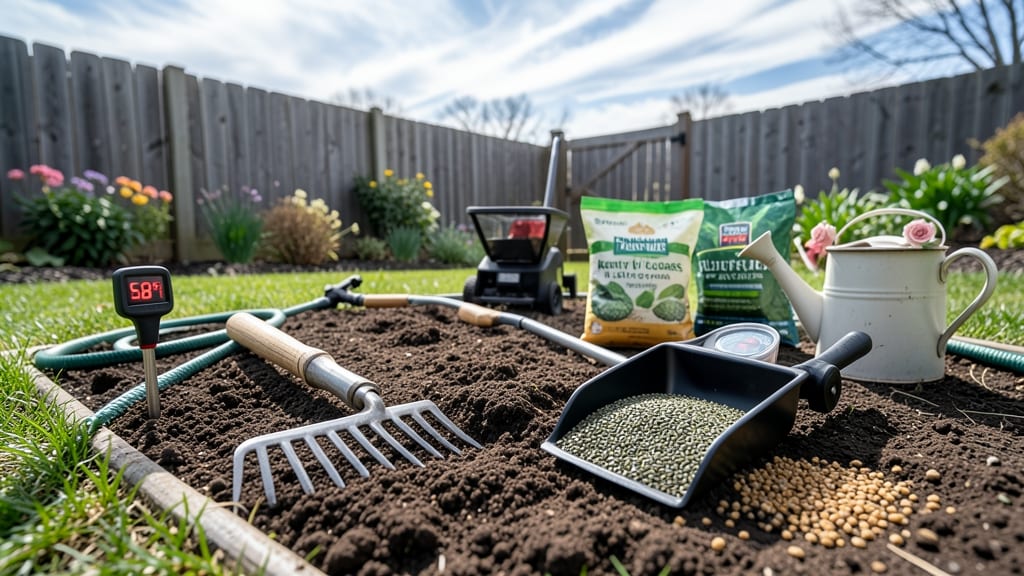
Timing your grass seed planting in spring can make or break your lawn’s success—especially if you want roots strong enough to survive the first mowing without stress. The wrong window means patchy growth, wasted seed, or even inviting weeds to take over your yard.
But get it right, and you’ll be rewarded with that vibrant green carpet you’ve been dreaming of.
Most gardeners in Zone 6a (like me!) know the struggle of waiting too long or planting too early. The key is understanding your local climate—cool-season grasses like fescue thrive when soil temperatures hit 50–65°F, while warm-season types need that late-spring warmth.
I’ll break down exactly when to plant based on your region, so you can avoid common mistakes that leave lawns looking sad and sparse.
You’ll also discover how to prep your soil like a pro—because even the best seed won’t germinate if the ground is too cold, dry, or compacted.
Plus, I’ll share my foolproof 4-week care checklist to ensure your grass establishes roots deep enough to handle foot traffic, mowing, and whatever summer throws at it. Let’s get that lawn looking its best from day one.
Ready to ditch the guesswork? By the end of this guide, you’ll know exactly when to plant, how to test your soil, and what to watch for in those critical first weeks. Your future mower-friendly lawn starts here—no more second-guessing!
Optimal spring planting windows for grass seed by climate zone
Spring is the prime time to plant grass seed, but the exact timing depends on your climate zone and the type of grass you’re growing.
Cool-season grasses like Kentucky Bluegrass and Fescue thrive when planted in early spring, while warm-season types such as Bermuda or Zoysia need the heat of late spring to germinate successfully.
Your last frost date is the key marker—plant 4–6 weeks before it arrives to give seedlings time to establish roots before summer heat sets in. For example, in Zone 5, early April is ideal, while in Zone 8, late April to early May works best.
Southern Hemisphere gardeners should reverse this schedule, planting in late summer/early fall.
Soil temperature is another critical factor. Grass seeds need soil that’s consistently 50–65°F for germination. Use a soil thermometer to check—if it’s below 50°F, wait a few weeks. In northern regions, this often means waiting until mid-April, while southern zones can start as early as February.
Here’s a quick zone-by-zone breakdown to help you pinpoint the best window for your lawn:
| Climate Zone | Ideal Planting Window | Soil Temp Threshold | Grass Types | Key Tip |
|---|---|---|---|---|
| Zones 3–5 (Northern U.S.) | Early to mid-April | 50–60°F | Cool-season (Kentucky Bluegrass, Fescue) | Avoid planting if frost is forecasted within 2 weeks. |
| Zones 6–7 (Mid-Atlantic/South) | Late March to early May | 55–65°F | Cool-season + Warm-season (Tall Fescue, Bermuda) | Test soil—if too cold, delay until May for warm-season grasses. |
| Zones 8–10 (Southwest/South) | Late April to early June | 60–70°F | Warm-season (Bermuda, Zoysia, St. Augustine) | Plant after last frost—heat helps germination. |
| Southern Hemisphere (Australia/NZ) | Late August to October | 50–65°F | Cool-season (Ryegrass, Fescue) | Spring in the Southern Hemisphere = autumn in the Northern Hemisphere. |
Regional variations matter too. For instance, Pacific Northwest gardeners should aim for March–April due to cooler, wetter springs, while Texas lawns often wait until May to avoid summer drought stress. Always check your local frost dates—the USDA’s Plant Hardiness Zone Map is a great resource.
Pro tip: If you’re in a transition zone (like Zone 7), split your planting. Sow cool-season grass in early spring and warm-season grass in late spring for year-round coverage. This two-step approach ensures your lawn stays green no matter the season.
Finally, don’t overlook rainfall patterns. If your spring is typically dry, schedule planting around predicted rain or be prepared to water daily for the first 2 weeks. A light mulch of straw can help retain moisture until germination.
Timing isn’t just about the calendar—it’s about giving your grass the best shot at deep roots before the first mowing. With the right window, you’ll see uniform germination and a lawn that’s ready to handle foot traffic by summer.
How to test soil readiness before planting grass seed
Before you rush to spread grass seed, testing your soil readiness is the secret to avoiding patchy germination and wasted seed. Cold soil can delay sprouting by weeks, while overly warm soil may dry out seeds before they take root.
Let’s break down how to check your soil’s temperature, moisture, and nutrient levels for success.
Start by checking your soil temperature—this is the #1 factor for spring planting. Grass seeds need soil to stay between 50°F and 65°F for consistent germination. Use a soil thermometer (just $10 at garden centers) or a DIY trick: press your hand into the soil for 5–10 seconds.
If it feels cool but not freezing, it’s likely in the right range.
Planting grass seed in cold soil (below 50°F) can cause seeds to rot, while soil above 70°F may dry out seeds before germination. Wait until soil temps stabilize in your zone—typically 2–4 weeks after the last frost for most regions.
Next, test moisture levels. Grass seeds need consistent moisture to sprout, but soggy soil suffocates roots. Grab a handful of soil and squeeze it—if it crumbles when dry but holds shape when wet, it’s ideal.
If it’s bone-dry, water deeply the day before planting. For clay-heavy soil, mix in compost or sand to improve drainage.
Don’t overlook nutrient readiness. Grass loves nitrogen, but too much fertilizer before planting can burn tender roots. Instead, spread a light layer of compost (¼ inch) over the soil 1–2 weeks before seeding. This boosts organic matter without overwhelming young plants. Skip synthetic fertilizers until after germination.
Finally, perform a quick pH check. Grass thrives in slightly acidic to neutral soil (pH 6.0–7.0). Use a soil test kit (available at garden centers) or send a sample to your local cooperative extension service.
If your soil is too alkaline (pH >7.5), amend it with sulfur or peat moss before planting.
Once your soil passes these tests—warm enough, moist but not soggy, and nutrient-ready—you’re ready to plant. Mark your calendar for 4–6 weeks after the last frost in your area, and your grass will thank you with deep, resilient roots by mowing season.