
Plants
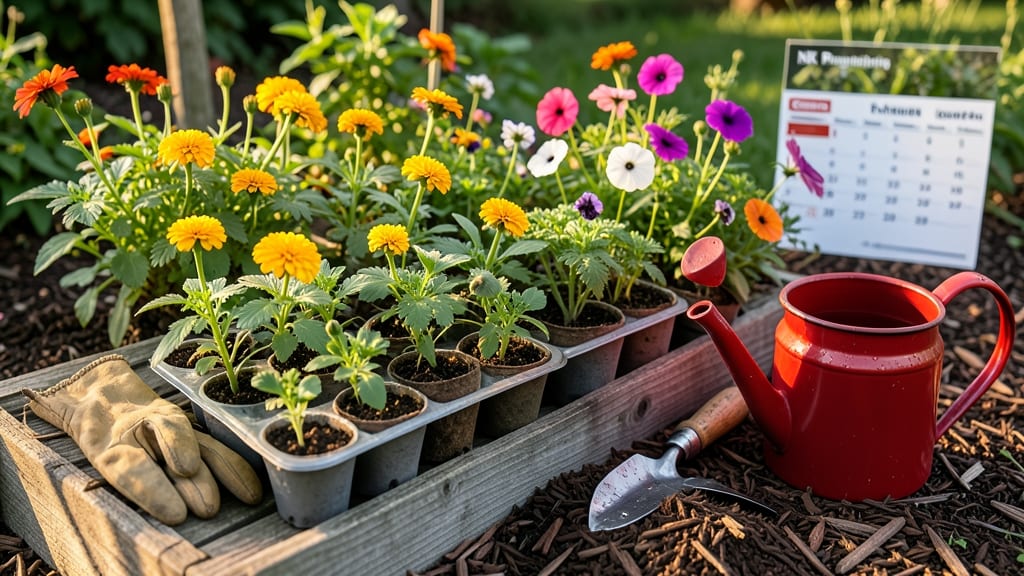
Timing your annuals planting in NJ can mean the difference between a garden bursting with color by Memorial Day and one that struggles to catch up.
The last frost dates vary wildly across the state—coastal areas like Cape May might be frost-free by early April, while inland spots near the Delaware Water Gap could still see chilly nights in mid-May.
For bold summer blooms, you’ll want to get heat-loving annuals like marigolds and zinnias in the ground 2-4 weeks after your area’s last frost. But here’s the catch: rushing too early can leave tender seedlings vulnerable, while waiting too long risks missing the prime window for continuous summer color.
This guide breaks down the exact planting windows for NJ’s three distinct microclimates—coastal, inland, and piedmont—so you can plan with confidence. Whether you’re sowing seeds indoors or transplanting starter plants, we’ll cover the best varieties for each zone and how to extend their blooming season through summer’s heat.
Ready to transform your garden into a nonstop floral show? Let’s dive into the perfect planting schedule tailored to your corner of New Jersey—because timing is everything when it comes to annuals 🌱.
NJ planting zones explained: coastal vs. inland vs. piedmont timelines
New Jersey’s three distinct microclimates—coastal, inland, and piedmont—create wildly different planting conditions. The coastal zone (USDA 7a) enjoys milder winters and cooler summers, while the piedmont region (USDA 6b) experiences hotter summers and earlier frosts.
Understanding these zones helps you pick the perfect planting window for your annuals.
Coastal areas like Cape May and Atlantic City typically have last frost dates around April 15–May 1, giving you a head start.
In contrast, inland zones like Trenton or Princeton average May 1–15 for last frost, while piedmont areas (e.g., Morristown) may see frost as late as May 15–30. These differences mean your marigolds or petunias could bloom weeks earlier—or later—depending on where you garden.
Heat tolerance is another critical factor. Zinnias and lantana, for example, thrive in piedmont’s hotter summers but may struggle in coastal humidity. Meanwhile, pansies and snapdragons prefer cooler coastal conditions. Matching your plants to your zone ensures they survive NJ’s unpredictable spring weather and deliver long-lasting blooms.
Here’s how to align your planting with NJ’s unique zones for maximum success:
| Zone | Last Frost Date | First Frost Date | Ideal Planting Window | Heat-Tolerant Picks |
|---|---|---|---|---|
| Coastal (USDA 7a) | April 15–May 1 | October 15–30 | April 1–May 15 | Marigolds, Petunias, Salvia |
| Inland (USDA 7a) | May 1–15 | October 1–15 | May 1–June 1 | Zinnias, Lantana, Portulaca |
| Piedmont (USDA 6b) | May 15–30 | September 20–October 10 | May 15–June 15 | Sunflowers, Cosmos, Verbena |
For coastal gardeners, start heat-loving annuals like geraniums or celosia by April 15 to beat summer humidity. Inland zones should wait until May 1 to avoid late frosts, while piedmont gardeners can push limits with late-June plantings of drought-resistant varieties like blanket flower.
Pro tip: Use row covers in inland/piedmont zones to extend your planting window by 2–3 weeks. This protects tender annuals like basil or cosmos from unexpected late-spring frosts, giving you an earlier start to the season.
Don’t overlook microclimates within zones. A south-facing slope in Morristown may warm up faster than a shady woodland garden in Trenton. Observe your space for 2–3 years to refine your planting schedule based on local patterns.
If you’re unsure about your zone, check the NJ Agricultural Experiment Station’s frost maps or use a frost-free date calculator. These tools account for urban heat islands and elevation changes that can shift your last frost date by weeks.
Precision planting ensures your annuals thrive from May through October.
For coastal gardeners, prioritize humidity-tolerant varieties like impatiens or begonias, while piedmont gardeners should focus on drought-resistant options such as lavender or yucca. Aligning your choices with your zone’s climate quirks is the secret to bold, long-lasting blooms all season.
Best annual flowers for NJ’s short vs. long seasons (with exact start dates)
New Jersey’s short coastal summers and longer inland heat waves demand smart annual choices. Some flowers thrive in quick spring-to-fall windows, while others stretch blooms until frost. Let’s match your microclimate zone with the perfect annuals—and their exact planting windows—to maximize color from May through October.
For coastal NJ (Zone 6b-7a), where summers are brief and humidity lingers, prioritize heat-tolerant, disease-resistant varieties like lantana and salvia. Inland areas (Zone 7a) can handle longer-season powerhouses such as zinnias and marigolds, which bloom until hard frost.
Piedmont regions? Go bold with petunias and geraniums, which love the extra warmth.
🌱 NJ Annual Planting Calendar by Zone
| Plant Type | Coastal NJ (Zone 6b) | Inland NJ (Zone 7a) | Piedmont NJ (Zone 7a) |
|---|---|---|---|
| Heat-Lovers (May-July) | Start April 15 (after frost) | Start April 1 (soil warm) | Start March 20 (earlier warmth) |
| Long-Season Stars (April-October) | Direct sow May 10 | Direct sow April 20 | Direct sow April 10 |
| Cool-Season Holdovers (August-Frost) | Sow July 15 (shade cloth) | Sow July 1 (extended season) | Sow June 20 (longer fall) |
Pro Tip: Coastal areas need shade cloth for late-season plants to avoid salt spray damage.
Succession planting is your secret weapon in NJ. For example, marigolds planted in early May will fade by August—so sow a second batch in late June to keep those golden blooms going. Similarly, cosmos self-seed reliably, but a mid-July replant ensures denser clusters. Inland gardeners can push boundaries with tropical-looking cannas, which thrive when planted after Memorial Day and bloom until frost.
Don’t overlook edible annuals like basil and nasturtiums, which double as flowers and harvests.
Plant basil in late April (coastal) or early April (inland) for a summer-long supply—just watch for downy mildew in humid pockets. Nasturtiums, with their peppery leaves, love full sun and tolerate poor soil, making them perfect for July replanting after early blooms fade.
For late-season color, turn to pansies and snapdragons. These cool-loving annuals handle light frosts and can be sown as early as July 1 (inland) or July 15 (coastal) for October-November displays. Pair them with ornamental kale for a winter-ready garden that still pops.
Microclimate hack: Coastal gardens benefit from wind-resistant varieties like veronica or catmint, while inland heat calls for drought-tolerant picks such as portulaca (which thrives on neglect). Always check your local Cooperative Extension for last-frost updates, as NJ’s zones shift slightly year to year.
🌻