
Plants
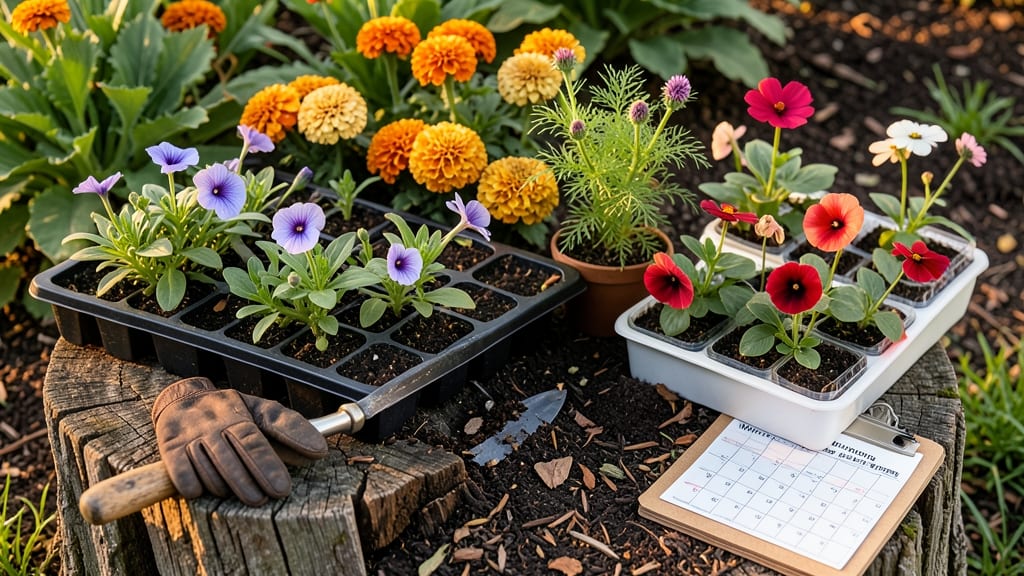
Timing your annuals planting in Wisconsin can feel like playing a game of frost-related roulette—get it wrong, and your vibrant garden dreams might freeze before they even bloom.
But here’s the good news: with the right approach, you can outsmart Wisconsin’s unpredictable weather and enjoy a garden that thrives from spring to fall.
Whether you’re in Milwaukee’s urban gardens or a rural farm in northern Wisconsin, the key lies in understanding your local frost dates and choosing the right varieties.
Cool-season annuals like pansies and snapdragons can handle late frosts, while warm-season favorites like marigolds and petunias need to wait until the soil warms up. Let’s break down exactly when to plant for the best results.
I’ve tested what works in Wisconsin’s USDA Zones 3–5, and the difference between a thriving garden and a frost-killed disappointment often comes down to these simple timing strategies. You’ll learn how to read the signs, adjust for your specific region, and even extend your planting season with smart techniques.
Ready to turn your garden into a frost-proof success story?
From soil prep to selecting cold-hardy annuals, I’ll walk you through every step so you can confidently plant your garden—no more guessing games. Let’s get those 🌱 annuals growing strong, no matter what Wisconsin throws your way.
Wisconsin frost dates & best planting windows by region
Wisconsin’s USDA Zones 3–5 mean frost dates vary wildly—from May 15 in southern Milwaukee to June 1 in northern Green Bay. These differences dictate whether you can plant marigolds in April or must wait until after Mother’s Day. Understanding your microclimate is key to avoiding frost damage.
Most Wisconsin gardeners divide planting into three critical windows: early spring (cold-hardy annuals), late spring (warm-season favorites), and post-frost adjustments. Rural areas often have 10–14 days earlier last frost dates than cities due to the urban heat island effect. Check your local cooperative extension for precise data.
Comparison Table: Wisconsin Frost Dates & Planting Windows by Region
| Region | Avg. Last Frost | Early Spring Planting (Cold-Hardy) | Late Spring Planting (Warm-Season) | Post-Frost Adjustments |
|---|---|---|---|---|
| Southern WI (Milwaukee) | May 10–15 | April 1–15 (pansies, snapdragons) | May 20–30 (petunias, tomatoes) | Use row covers for late bloomers |
| Central WI (Madison) | May 1–10 | April 15–May 1 (calendula, sweet alyssum) | May 15–25 (geraniums, basil) | Plant heat-lovers after May 20 |
| Northern WI (Green Bay) | May 20–June 1 | May 1–15 (hardy annuals only) | June 1–10 (wait for soil warmth) | Extend season with cold frames |
| Rural Areas | 10–14 days earlier | Start 2 weeks ahead | Plant 1–2 weeks earlier | Monitor microclimates |
For southern Wisconsin, I start sowing cold-hardy annuals like pansies in early April, even if nights dip to 28°F. These varieties survive light frosts and reward patience with early blooms. Meanwhile, warm-season plants like impatiens must wait until soil temperatures hit 60°F, typically late May.
In northern Wisconsin, where frosts linger until June, I opt for slow-growing annuals like lobelia or stock, which tolerate cooler soils. Rural gardeners can push windows earlier by 10–14 days thanks to less urban heat retention.
Always test soil warmth with a soil thermometer—50°F+ is ideal for most annuals.
Pro tip: Use frost-free date calculators from the UW Extension to adjust for 3–5 year averages. For example, Madison’s last frost has shifted 2–3 days earlier per decade due to climate change. Stay flexible!
If you’re in Zone 4 or 5, prioritize succession planting every 2–3 weeks after your last frost. This ensures continuous blooms from May through October, even if early plantings falter. For example, sow basil in late May and again in July for a double harvest.
Remember: Frost dates are predictions, not rules. I’ve lost tomato seedlings to May frosts and salvaged pansies after June freezes. The key is layering strategies—like row covers or staggered sowing—to hedge against Wisconsin’s unpredictable weather.
🌱
Cold-hardy annuals that thrive after Wisconsin’s late frost
Wisconsin’s late frosts can wreak havoc on tender annuals, but some varieties are built to handle 28°F+ dips without skipping a beat. These cold-hardy annuals are my go-to picks for extending your garden’s season and ensuring color even after Mother Nature throws a curveball.
Think pansies, snapdragons, and calendula—they’re the unsung heroes of Wisconsin gardens.
I’ve grown these in Zone 3–5 for years, and the difference between a frost-killed garden and one that blooms beautifully often comes down to choosing the right plants. For example, pansies can handle light frosts down to 20°F, while sweet alyssum thrives in cooler temps and even deters pests.
Let’s dive into the top 12 frost-tolerant annuals and how to plant them for maximum impact.
These cold-hardy annuals are perfect for Wisconsin’s late frosts, but planting them at the right time is key. For example, pansies and sweet alyssum can be sown as early as late April in southern Wisconsin (Zone 5) or mid-May in northern areas (Zone 3).
Start seeds indoors 4–6 weeks before your last frost date for a head start, or buy established plants from a local nursery once soil temps hit 40°F+.
Don’t overlook edible annuals like calendula and nasturtiums, which tolerate light frosts and add a pop of color to salads. I’ve even seen radishes and spinach survive 25°F with a little protection.
The trick is to plant them in well-draining soil and avoid overwatering before the ground thaws completely. A mulch layer of straw or leaves can also protect roots from temperature swings.
For warm-season annuals like marigolds and petunias, wait until 2 weeks after your last frost date—usually mid-May to early June in Wisconsin. But if you’re itching to plant earlier, use row covers or cold frames to shield seedlings from unexpected chills.
I’ve had marigolds bloom by late June using this method, even in Zone 4.
Pro tip: Pair cold-hardy annuals with perennials like coneflowers or black-eyed Susans for a low-maintenance garden that thrives year after year. This combo reduces the risk of frost damage and gives you continuous blooms from spring to fall. Happy planting—your frost-proof garden awaits! 🌷