
Companion Plants
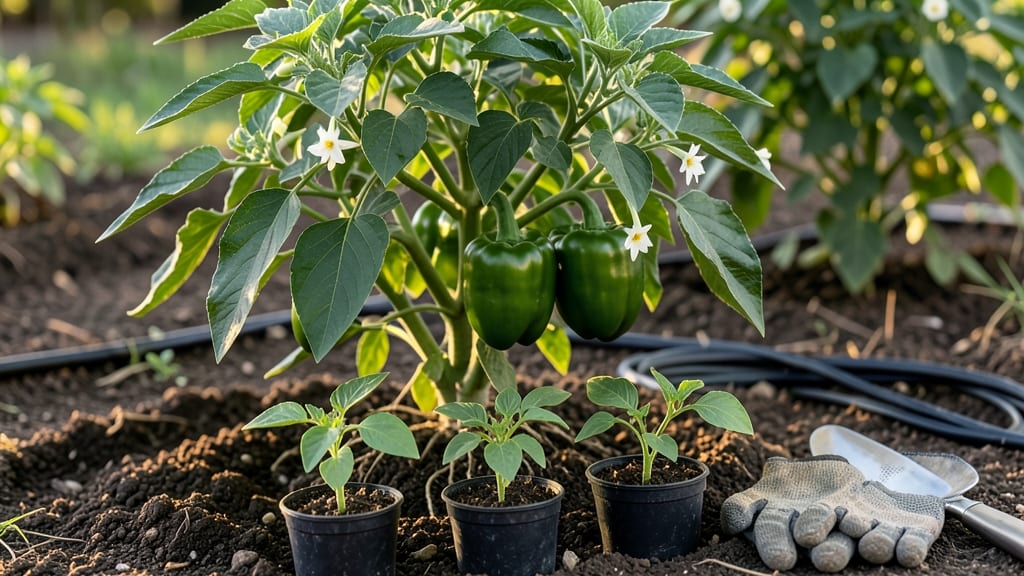
Knowing when to plant bell peppers in PA is the difference between a bumper crop of crisp, juicy 🌶️ and a sad, wilted disappointment. Pennsylvania’s spring weather can be as unpredictable as a rollercoaster, and bell peppers—those heat-loving divas—need consistent warmth to thrive.
Plant too early, and a late frost will turn your seedlings into sad, mushy memories. Wait too long, and you might miss the sweet spot for a full harvest before fall sets in.
Most gardeners in Pennsylvania’s USDA zones 5a-7b wait until after the last frost—typically between April 15 and May 15—to transplant bell pepper seedlings outdoors. But here’s the catch: soil temperature matters just as much as air temperature.
Your peppers won’t be happy until the ground warms up to at least 60°F, which can sometimes mean waiting a little longer in cooler regions like the Poconos or waiting a bit earlier in warmer areas near Philadelphia.
If you’re starting seeds indoors, the key is timing: begin them 8 to 10 weeks before your last frost date. That means hitting the seed tray around mid-February to early March for most of PA.
By the time you’re ready to transplant, your seedlings will be sturdy and ready to face the great outdoors—just don’t rush it. A few extra weeks of patience can mean the difference between a garden full of peppers and a garden full of regret.
In this guide, I’ll break down the best planting windows for your specific region in PA, share pro tips for extending your growing season, and help you avoid the most common mistakes that turn promising peppers into disappointing flops. Let’s get those 🌶️ growing!
Best planting dates for bell peppers in pennsylvania by region
Pennsylvania’s diverse climate means your bell pepper planting window varies dramatically from Philadelphia’s USDA Zone 6b to Pittsburgh’s Zone 6a. The golden rule: wait until soil reaches 65°F+ and nighttime temps stay above 50°F consistently.
In most regions, this lands between mid-May and early June, but let’s break it down by zone to avoid frost surprises.
Southeastern PA (Zones 6b-7a) enjoys the earliest windows—think Philadelphia, Allentown, and Lancaster. Here, you can safely transplant seedlings April 20–May 10, assuming no late frosts.
Central PA (Zones 6a-6b)—like Harrisburg and York—should wait until May 10–20, while Northwestern PA (Zones 5b-6a), including Erie and Scranton, often needs to hold off until May 20–June 5.
Pro tip: Use the National Weather Service’s frost predictions (available on their website) to fine-tune your timing. For example, Harrisburg’s average last frost is April 25, but a 2022 cold snap delayed planting by three weeks for many gardeners. Always have row covers ready for unexpected chilly nights.
🌱
Microclimates play a huge role in PA. Urban areas like Philadelphia’s Center City can be 5–10°F warmer than nearby suburbs due to concrete heat absorption. If you’re in a city garden, you might push transplanting 1–2 weeks earlier than rural areas.
Conversely, high-elevation spots (e.g., parts of the Poconos) may need to wait until June 1.
For direct sowing (planting seeds outdoors), add 2–3 weeks to these windows since seedlings take longer to establish. Varieties like ‘Early California Wonder’ (60 days to maturity) are better for direct sowing, while ‘Jupiter’ (75 days) needs a head start indoors.
🌿
Don’t forget to harden off seedlings for 7–10 days before transplanting. Gradually expose them to PA’s wind and sun by placing them outdoors for 1–2 hours daily, increasing time each day. Skip this step, and your delicate seedlings will shock and struggle in the garden.
Finally, succession planting is key for a continuous harvest. If you plant a second batch June 1–15, you’ll extend your harvest into October—just be ready to use row covers as temps drop. In Zone 6a, this might mean harvesting until October 1 with protection.
☀️
How to extend the bell pepper growing season in PA’s short summers
Pennsylvania’s short growing season (just 165 frost-free days) can feel like a race against time for bell peppers, which need 70°F+ soil to thrive. But with the right strategies, you can push your harvest into late October—or even trick your plants into producing earlier!
The key is combining early starts, season extensions, and fast-maturing varieties tailored to PA’s climate.
Start seeds indoors 8–10 weeks before your last frost date (typically mid-March for most of PA). Use grow lights or a sunny windowsill to give seedlings 12–14 hours of light daily.
This head start lets you transplant 2–3 weeks earlier than direct-sowing gardeners, giving peppers more time to mature before fall’s chill sets in.
🌱 5 Proven Ways to Extend Your Bell Pepper Season
- 1. Start seeds indoors (March) for a 2–3 week head start.
- 2. Use row covers (May–June) to raise soil temps by 2–5°F.
- 3. Choose fast varieties like ‘Jupiter’ (60 days) or ‘Carmen’ (65 days).
- 4. Mulch heavily with straw to insulate roots and retain warmth.
- 5. Succession plant every 2 weeks in June for staggered harvests.
Once seedlings are 3–4 inches tall and have 2–3 sets of leaves, harden them off by placing them outside for 2–3 hours daily over 7–10 days.
Start with morning sun and gradually increase exposure. This toughens seedlings to handle PA’s unpredictable spring winds and temperature swings (common in zones 5a–6b).
For late-summer protection, use floating row covers or low tunnels to extend harvests by 3–4 weeks. These create a 2–4°F warmer microclimate, shielding peppers from early October frosts.
Just remove covers during pollination days (when flowers appear) to prevent heat stress. Pair this with black plastic mulch, which warms soil 5–10°F faster than bare ground.
Don’t overlook succession planting! Sow a second batch of seeds every 2 weeks in June for a continuous harvest. Opt for short-day varieties like ‘Sweet Banana’ (70 days), which mature faster in PA’s cooler summers. Pair them with basil or marigolds to repel pests and improve flavor.
Finally, monitor NOAA frost forecasts and soil thermometers (soil must stay above 60°F for roots). If nights dip below 50°F, cover plants with burlap or frost cloth—even a single night below 40°F can stunt growth.
With these tactics, you’ll turn PA’s short season into a long, productive harvest! 🌶️