
Plants
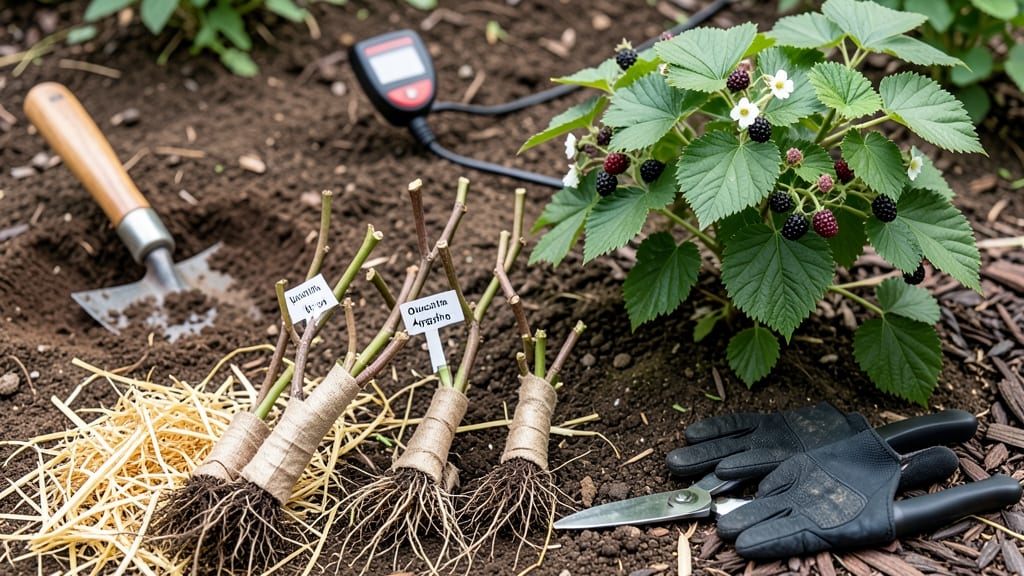
Timing your blackberry planting in Texas isn't just about the calendar—it's about matching your 🫐 bushes to the region's chill hours and frost windows. Get this wrong, and you might end up with sparse harvests or plants that struggle to survive the heat.
But nail it, and you'll unlock a summer filled with sweet, juicy berries that outshine store-bought any day.
The 8a-10b zones across Texas create unique challenges, from early spring frosts in North Texas to balmy winters in the South. That's why planting in late winter (February) or early spring (March) gives your blackberries the best shot at establishing strong roots before the real heat arrives.
Think of it as giving your plants a head start on summer's demands.
Here's the game-changer: different blackberry varieties have different chill hour requirements, and Texas' diverse climate means what works in Zone 8a might flop in Zone 10b. We'll break down exactly which varieties thrive where and how to prepare your soil for maximum success—whether you're planting in-ground or containers.
Ready to transform your backyard into a blackberry paradise? Let's dive into the critical timing, variety selection, and soil secrets that will have your bushes thriving from April through September. Your first perfect harvest is just a few months away!
Best planting months for Texas blackberries by chill-hour Zone
Texas gardeners know timing is everything—especially when planting blackberries. Unlike cooler climates, Texas's chill-hour zones (ranging from 500-1,000 hours) dictate the perfect window for planting. In North Texas (Zones 8a-8b), where winters are cooler, aim for late winter (February) to early spring (March).
Meanwhile, Central and South Texas (Zones 9a-10b) thrive with early spring (March-April) plantings to avoid summer heat stress.
Why? Blackberries need 4-6 weeks of cool soil temps (50-60°F) to establish roots before summer’s brutal heat kicks in. Planting too early risks frost damage, while late plantings may stunt growth. My Texas A&M AgriLife Extension research confirms: March is the goldilocks month for most regions.
Soil temperature is your secret weapon. Use a soil thermometer to confirm temps are above 55°F before planting. In East Texas (higher humidity), wait until mid-March to avoid fungal diseases. For West Texas (drier climates), February’s cooler nights work perfectly.
🌱
| Texas Region | Chill Hours | Best Planting Window | Soil Temp Goal | Key Consideration |
|---|---|---|---|---|
| North Texas (8a-8b) | 800-1,000 hrs | Late Feb - Early Mar | 55-60°F | Avoid late frosts |
| Central Texas (8b-9a) | 600-800 hrs | Early Mar - Mid-Apr | 60-65°F | Watch for heat spikes |
| South Texas (9b-10b) | 400-600 hrs | Mid-Mar - Early Apr | 65-70°F | Prioritize shade cloth |
| East Texas (Humid) | 700-900 hrs | Mid-Mar - Late Mar | 55-60°F | Fungal disease risk |
Moisture matters just as much as timing. After planting, keep soil consistently moist (not soggy) for the first 6-8 weeks to encourage root growth. In West Texas, where drought is common, use drip irrigation to deliver water directly to roots.
For East Texas, raised beds improve drainage and reduce fungal risks.
Pro tip: If you miss the spring window, fall planting (October-November) is possible in North Texas—but only if you choose everbearing varieties like 'Apache' or 'Navajo'. These adapt better to shorter chill periods. Just be prepared for less robust first-year growth compared to spring plantings.
Container growing extends your options. In urban Texas, plant in 5-gallon pots filled with well-draining potting mix and move containers to partial shade during summer’s peak heat (June-August). This mimics the natural dormancy blackberries experience in cooler climates.
Remember: Blackberries are hungry plants. Before planting, amend your soil with 2-3 inches of compost and a balanced fertilizer (10-10-10). In clay-heavy soils (common in Central Texas), mix in sand or perlite to improve drainage.
Poor drainage leads to root rot, which can kill your bushes within weeks.
💧
For maximum success, pair your planting timing with variety selection. Thornless varieties like 'Chester' or 'Ouachita' thrive in Central and South Texas, while traditional types like 'Brazos' excel in North Texas.
Always check the chill-hour requirements on your plant tags—some varieties need 500+ hours, while others tolerate 300 hours.
Finally, mark your calendar for pruning season (late winter). This keeps your
Best planting months for Texas blackberries by chill-hour Zone
Texas spans three distinct chill-hour zones, each dictating the perfect window for planting blackberry canes. North Texas (USDA Zones 7b-8a) needs 500-700 chill hours, while Central Texas (Zones 8a-8b) thrives with 300-500 hours, and South Texas (Zones 9a-10b) requires less than 300 hours.
Planting outside these ranges risks poor fruit set or winter dieback.
For North and Central Texas, aim for late February to early March when soil temps hit 55°F+. South Texas gardeners should plant in January to early February to avoid summer heat stress. Always check your local last frost date—planting too early risks frost damage to tender roots.
| Zone | Chill Hours | Best Planting Window | Soil Temp | Key Tip |
|---|---|---|---|---|
| North Texas (7b-8a) | 500-700 hrs | Late Feb - Early Mar | 55°F+ | Use cold-hardy varieties like 'Arapaho' |
| Central Texas (8a-8b) | 300-500 hrs | Early Mar - Mid-Mar | 60°F+ | Mulch heavily to retain moisture |
| South Texas (9a-10b) | <300 hrs | Jan - Early Feb | 65°F+ | Choose heat-tolerant 'Natchez' or 'Ouachita' |
Soil preparation is half the battle—Texas soils often compact or lack organic matter. Amend with 2-3 inches of compost and ensure well-draining conditions, especially in clay-heavy areas. A pH of 5.5-6.5 is ideal for blackberries, so test your soil before planting.
For container growing (great for urban Texas gardens), plant in 5-gallon pots with a fast-draining mix. Containers warm up faster, so adjust your planting window 2-3 weeks earlier than in-ground plantings to avoid heat stress.
After planting, water deeply 2-3 times per week for the first month to encourage root establishment. Avoid overhead watering to prevent fungal diseases like botrytis, which thrives in Texas's humid summers.
Pro tip: Mark your planting date on a calendar—blackberries need 120-150 days to bear fruit after planting. In South Texas, this means your first harvest could arrive as early as June, while North Texas gardeners typically see fruit in late July.