
Plants
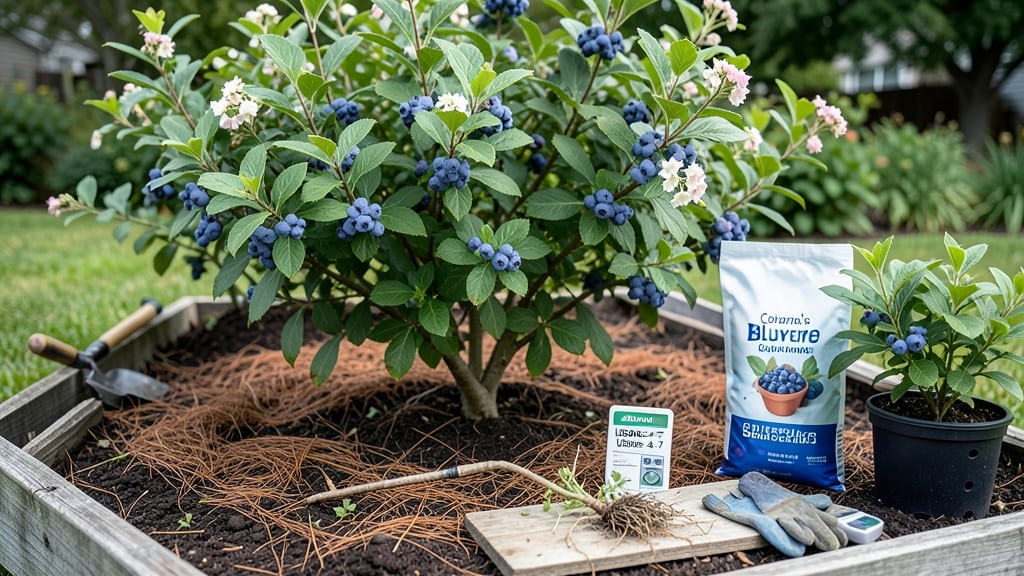
Timing your blueberry planting in Colorado isn’t just about dodging late frosts—it’s about matching your shrubs to the state’s chill-hour zones for the juiciest harvests. With USDA zones 5-7 throwing curveballs like early spring freezes or high-altitude heat, one wrong move could leave your 🫐 bushes struggling.
Most Colorado gardeners swear by planting between late April and early June, but that window shifts depending on elevation. In Denver’s urban heat pockets, you might edge closer to May, while mountain growers near zone 5 borders could wait until June to play it safe.
Here’s the game-changer: chill-hour needs dictate your variety. Northern Highbush thrives in 600+ hours of winter chill, while Southern types prefer 300–500 hours. Get this wrong, and you’ll end up with flowers but no fruit—or worse, a bush that gives up entirely.
I’ll walk you through exactly how to sync your planting with Colorado’s frost maps, soil prep secrets, and even how to cheat the system with mulch and containers. Let’s get those bushes thriving before the July harvest rolls around.
Colorado’s chill-hour zones: how to pick the right blueberry variety for your region
Colorado’s diverse elevations—from the high-altitude mountains to the Front Range valleys—create chill-hour zones that drastically affect blueberry success.
These zones measure winter cold exposure (below 45°F), which blueberries need to fruit properly. Northern Highbush varieties thrive in zones with 600–1,200 chill hours, while Southern Highbush and Rabbiteye varieties prefer 300–600 hours. Ignoring this can mean no berries—or worse, dead plants!
For example, Denver’s USDA Zone 5b (average 800–1,000 chill hours) is perfect for ‘Bluecrop’ or ‘Jersey’, but the same variety might fail in Zone 7a (e.g., Colorado Springs, ~500–700 hours). Half-High varieties like ‘Top Hat’ bridge the gap, needing just 400–600 hours—ideal for high-altitude gardens (7,000+ ft) where winters are harsher.
Here’s the critical rule: Match your variety to your chill hours, not just your frost dates. A Southern Highbush planted in Zone 5 may bloom early but produce few berries because it didn’t get enough winter chill.
Conversely, a Northern Highbush in Zone 7 might struggle to set fruit at all.
Colorado’s microclimates add another layer. Urban areas like Boulder or Fort Collins often have warmer winters than rural zones, while mountain towns like Leadville (Zone 4) need hardier varieties like ‘Northblue’. Always check your local chill-hour map—Colorado State University’s Extension Office has free tools to estimate your zone.
| Colorado Region | Chill Hours | Best Varieties | Elevation Range |
|---|---|---|---|
| Denver/ Front Range | 800–1,000 | Bluecrop, Jersey, Legacy | 4,500–6,500 ft |
| Colorado Springs | 500–700 | Top Hat, Sunshine Blue, Tifblue | 5,500–7,000 ft |
| Grand Junction | 300–500 | O’Neal, Climax, Premier | 3,500–5,000 ft |
| Mountain Towns (e.g., Leadville) | 1,000–1,200+ | Northblue, Patriot, Aurora | 7,000–9,000 ft |
🌱 Pro Tip: Test your chill hours with a chill-hour calculator (e.g., USDA Plant Hardiness Tool) for precise matches.
If you’re in a transition zone (e.g., Zone 6 near the Wyoming border), opt for low-chill varieties like ‘Chester’ or ‘Duke’. These handle 400–600 hours and still produce well.
For container gardening in urban areas, Southern Highbush varieties are your best bet—they adapt better to warmer microclimates and can be moved to protect from late frosts.
One mistake I see often? Gardeners buying Northern Highbush plants at big-box stores without checking their local chill hours. A $20 plant can turn into a $20 lesson if it fails to fruit. Always ask for local recommendations at Colorado nurseries—they know which varieties survive your specific frost patterns.
For high-altitude gardens, consider dwarf varieties like ‘Top Hat’ (3–4 ft tall). They’re hardier, fruit earlier, and handle shorter growing seasons. In lower elevations, standard varieties like ‘Bluegold’ (6–10 ft) thrive with longer summers and warmer soils.
Finally, remember: Chill hours ≠ frost dates. You can have 1,000 chill hours but still face late spring frosts (common in Zone 5–6). That’s why planting time is just as critical as variety selection—we’ll cover that in the next section! 🌿
Best planting windows in Colorado: frost dates, soil prep, and early vs. late planting
Colorado’s last frost dates vary dramatically—from mid-April in Denver to early June in mountain regions like Fort Collins. For blueberries, this means you’ll need to adjust your planting timeline based on your USDA Zone (5-7) and elevation.
Most gardeners aim for late April to early June, but urban areas like Colorado Springs can safely plant as early as March if frost risks are minimal.
Soil temperature is another critical factor. Blueberry roots thrive when soil reaches 50°F (10°C)—use a soil thermometer to confirm readiness. In high-altitude zones (e.g., Boulder County), wait until May to avoid late-spring frost damage.
Container-grown blueberries adapt better to delayed planting, making them ideal for urban gardeners with limited ground space.
Proper soil preparation is non-negotiable in Colorado, where alkaline soils dominate. Test your soil’s pH—if it’s above 6.0, amend with sulfur or aluminum sulfate 2–3 months before planting.
For container gardening, use a 50/50 mix of peat moss and pine bark to mimic acidic forest floors. Drainage is equally critical; blueberries rot in soggy soil, so raise beds or plant on slopes if your yard is clay-heavy.
Mulching is your best friend in Colorado’s dry, windy climate.
Apply 3–4 inches of organic mulch (pine straw, wood chips) around the base of your bush to: - Retain moisture (critical in June–July droughts) - Insulate roots from temperature swings - Suppress weeds that compete for nutrients Keep mulch 2 inches away from the stem to prevent rot.
Urban gardeners with limited space shouldn’t overlook container planting. Use pots at least 18 inches deep with drainage holes, and choose dwarf varieties like ‘Top Hat’ (3–4 ft tall).
Containers dry out faster, so monitor soil moisture daily in summer heat. Move pots to partial shade if temperatures exceed 90°F (32°C) to prevent sunburn.
Finally, watering strategy makes or breaks success. Newly planted blueberries need 1–2 gallons of water per week during establishment. In Colorado’s dry air, water deeply in the morning to reduce evaporation.
Once established, reduce frequency but increase depth—deep roots = drought resilience. Avoid wetting foliage to prevent fungal diseases like botrytis.