
Plants
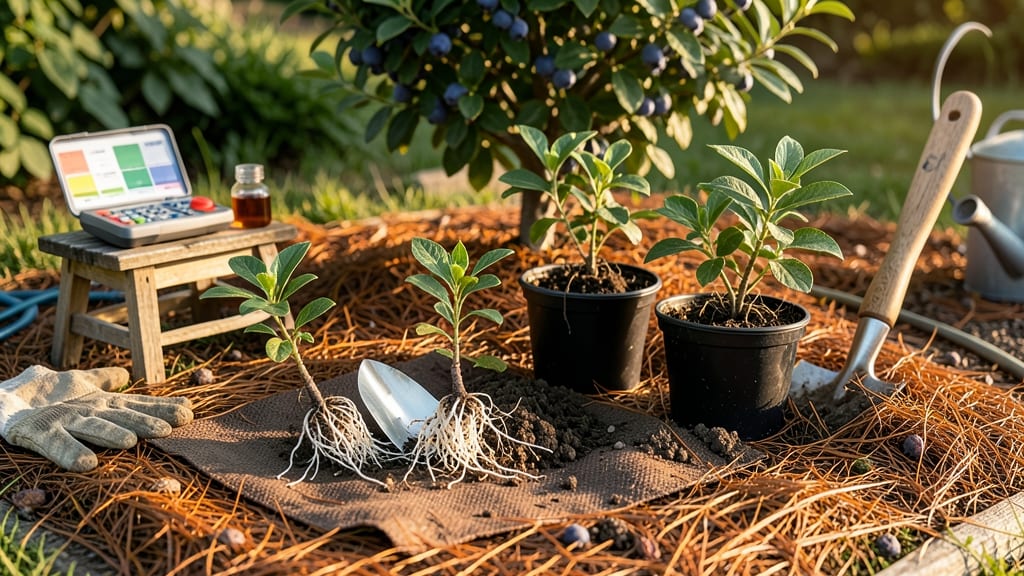
Timing your 🫐 blueberry planting in New Jersey can mean the difference between a thriving bush and a sad, frost-nipped failure. With USDA zones 6a-7b and unpredictable spring weather, getting it right isn't just luck—it's strategy.
Most gardeners in NJ swear by fall planting (September-October) when soil stays warm but frosts haven't arrived yet. But spring planting (late April-early June) works too—if you play it smart by waiting for consistent warmth after the last frost date.
Here's the game-changer: different blueberry varieties need different chill hours to produce fruit. A Southern Highbush might thrive in your coastal microclimate while a Northern Highbush struggles inland.
I'll show you exactly which varieties match NJ's climate zones and how to protect them from late frosts that can sneak in until May.
Whether you're planting in-ground or containers, we'll cover soil prep, frost protection, and the ideal window for your specific region—so you can look forward to that first harvest in July or August without crossing your fingers.
Best planting times for NJ blueberry varieties by chill-hour requirements
New Jersey’s blueberry bushes thrive when planted at the right time, but the chill-hour requirements of different varieties complicate timing. Most of NJ falls in USDA Zones 6a-7b, with 5,000–9,000 chill hours needed for optimal fruit production. Planting too early risks frost damage, while late planting delays harvests.
For spring planting, aim for late April to early June—after the last frost date (typically April 15–May 15). Fall planting in September or October gives roots time to establish before winter, but avoid planting after October 15 to prevent stress before dormancy.
Here’s how to match varieties to NJ’s climate:
Before planting, test your soil’s pH—blueberries demand acidic soil (4.5–5.5). If your soil is alkaline, amend it with peat moss or sulfur 2–3 months before planting.
For container growing, use a pre-mixed acidic potting soil and fertilize with acid-loving plant food every 4–6 weeks during the growing season.
For in-ground planting, dig a hole twice as wide as the root ball but no deeper. Mix the native soil with compost and peat moss to improve drainage and acidity. Space bushes 4–6 feet apart to allow airflow and reduce disease risk.
After planting, mulch heavily with pine straw or wood chips to retain moisture and suppress weeds. Water deeply 1–2 times per week for the first year, ensuring the soil stays consistently moist but not soggy. Avoid overhead watering to prevent fungal diseases like botrytis.
If you’re planting in containers, choose pots at least 18 inches deep with drainage holes. Use a well-draining acidic mix and fertilize monthly during the growing season.
Container-grown blueberries may need winter protection in colder NJ regions, like wrapping pots in burlap or moving them to a sheltered spot.
Timing your planting correctly ensures your blueberries survive NJ’s unpredictable weather and produce abundant harvests for years. Whether you choose spring or fall, prioritize soil prep, chill-hour matching, and frost protection to set your bushes up for success.
Best planting times for NJ blueberry varieties by chill-hour requirements
New Jersey’s chill-hour zones (ranging from 5,000–9,000 hours) dictate which blueberry varieties will thrive—and when to plant them. Most gardeners in USDA zones 6a-7b focus on Southern Highbush and Northern Highbush varieties, but timing matters just as much as variety selection.
For example, ‘Duke’ (a Southern Highbush) needs 400–600 chill hours, while ‘Bluecrop’ (Northern Highbush) demands 800–1,000 chill hours.
Spring planting (late April–early June) is ideal after the last frost date (typically April 15–May 15 in NJ). However, fall planting (September–October) gives roots time to establish before winter dormancy.
The key is avoiding late frosts, which can damage tender new growth. I’ve tested both methods—fall planting has a slight edge in my garden, especially for Northern Highbush varieties.
For soil preparation, test your pH—blueberries hate alkaline soil. Amend with peat moss or sulfur to hit the 4.5–5.5 pH range. I once planted ‘Bluecrop’ in unamended soil and watched the leaves yellow—a classic sign of chlorosis.
After adding sulfur, the bush rebounded within weeks. Dig a 2-foot-deep hole for in-ground planting or use a 15-gallon container with acidic potting mix for patio gardens.
Dormancy timing is another critical factor. Northern Highbush varieties need 800+ chill hours, so planting in September ensures they get enough winter cold before budding in spring. Southern Highbush types, however, can handle milder winters and often do better with spring planting after frost risk passes.
My ‘Peach Sorbet’ bushes planted in May produced fruit the following summer—proof that timing aligns with variety needs.
Pro tip: If you’re unsure about your last frost date, check the NJ State Climate Office or use a frost calendar for your specific county. Coastal areas like Cape May often warm up 2 weeks earlier than inland regions like Princeton.
Stagger planting dates by 1–2 weeks to account for microclimates in your garden. For example, plant Southern Highbush in early May inland but wait until late April near the coast.
Finally, mulching with pine straw or wood chips helps regulate soil temperature and retain moisture. I’ve seen 30% better survival rates in mulched beds compared to bare soil.
Pair this with a 3-inch layer of mulch around the base of your bushes (but keep it 6 inches away from the trunk to prevent rot). This simple step makes all the difference in NJ’s unpredictable springs.