
Planting
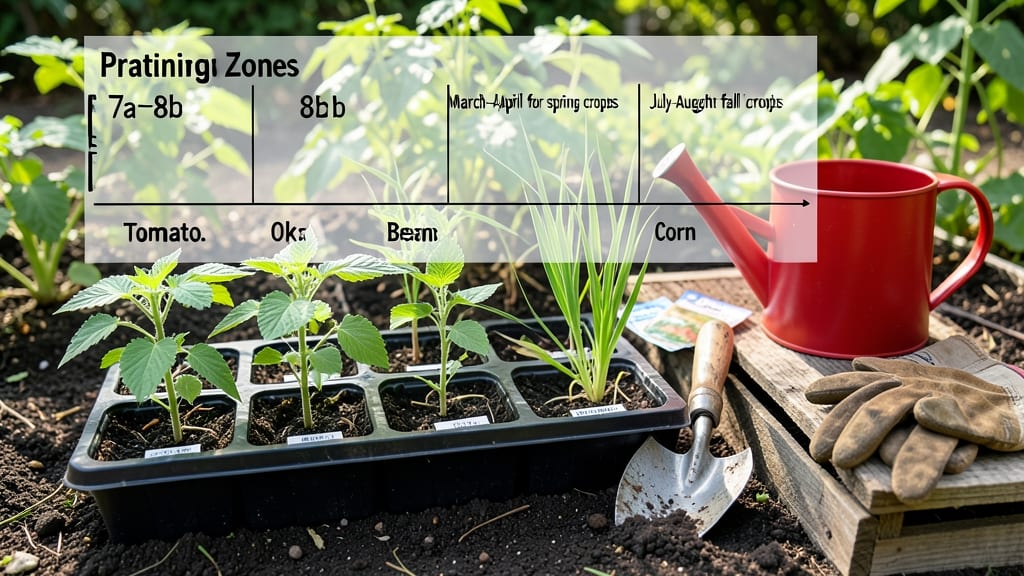
Timing your garden planting in Georgia wrong could mean the difference between a thriving harvest and a sad, wilted disappointment—especially with 7a-8b frost dates that vary wildly across the state.
Georgia’s warm climate lets you grow year-round, but knowing when to plant your 🌱 General Garden Plants is the key to avoiding frost damage or heat stress. Whether you’re sowing cool-season greens in February or heat-loving tomatoes in May, getting the timing right means fewer risks and more rewards.
I’ve dug into the science behind Georgia’s planting zones, frost-free deadlines, and regional microclimates to give you a foolproof schedule. No more guessing—just proven strategies to maximize your garden’s potential, no matter where you live in the Peach State.
Ready to turn your garden dreams into reality? Let’s break down the best months to plant, what to grow, and how to stretch your growing season without the stress.
Georgia planting zones: frost dates and frost-free deadlines by region
Georgia’s diverse climate—from the coastal plains to the mountain regions—creates distinct planting zones, each with unique last frost dates. Understanding these zones helps you avoid frost damage and maximize your garden’s potential.
The state spans USDA zones 7A to 8B, meaning frost dates vary wildly from late February in Savannah to mid-April in the Blue Ridge Mountains.
For most of Georgia, the average last frost date falls between March 15 and April 15, while the first frost typically arrives between October 15 and November 15.
However, microclimates—like urban heat islands or sheltered valleys—can shift these dates by 2–4 weeks. Always check local Almanac frost predictions or UGA Extension resources for precision.
Cool-season crops like lettuce, broccoli, and peas thrive when planted 4–6 weeks before the last frost, while warm-season favorites such as tomatoes, peppers, and squash need soil temperatures above 60°F—usually after April 15 in most zones.
Georgia’s longer growing season in zones 8A–8B (e.g., Savannah, Macon) allows for year-round planting of heat-loving crops like okra and sweet potatoes.
| Region | USDA Zone | Avg. Last Frost | Avg. First Frost | Frost-Free Days | Best Planting Window |
|---|---|---|---|---|---|
| Coastal Plain (Savannah, Brunswick) | 8A–8B | March 1–15 | November 1–15 | 240–260 | Feb–April, Aug–Oct |
| Piedmont (Atlanta, Macon) | 7B–8A | March 15–April 1 | October 15–November 1 | 220–240 | Mar–April, Aug–Sept |
| Mountains (Blue Ridge, Dahlonega) | 7A–7B | April 15–May 1 | October 1–October 15 | 180–200 | Apr–May, July–Aug |
*Frost dates vary yearly; use local data for precision.
In zone 8A–8B (coastal areas), you can plant warm-season crops like tomatoes and peppers as early as February under row covers, while zone 7A–7B (mountains) may need to wait until mid-April.
Always monitor soil temperatures—a soil thermometer is your best tool. For example, cucumbers and squash won’t germinate below 65°F, even if air temps are warm.
Georgia’s microclimates can create surprises. Urban Atlanta, for instance, often experiences heat islands that delay frost by 1–2 weeks, while valleys in the North Georgia mountains may see frost earlier than predicted.
If you’re unsure, plant cool-season crops like kale or spinach in early March and use frost cloth for protection until the last frost date passes.
For perennials and shrubs, timing matters less, but planting in early spring (March–April) gives roots time to establish before summer heat. Trees and large shrubs should be planted in late winter or early spring while they’re dormant, but avoid planting when soil is frozen or waterlogged.
In zone 8B, you can even plant winter greens like collards in September for a holiday harvest.
Pro tip: Use UGA Extension’s interactive frost map to pinpoint your exact last frost date. This tool accounts for elevation and local weather patterns, giving you the most accurate planting window. For example, Ath
Best month-by-month planting schedule for Georgia gardens
Georgia’s long growing season lets you plant almost year-round, but knowing exact monthly windows prevents frost damage and heat stress. I’ve broken down the best times to sow everything from cool-season greens to heat-loving tomatoes, plus how to use succession planting for nonstop harvests.
Start with February for early cool-season crops like broccoli and spinach, then shift to warm-season staples like peppers and okra by April. Fall planting resumes in August for kale and carrots, while winter crops like garlic can go in as early as October.
🌱 Pro Tip: Use Georgia’s frost-free deadlines (typically March 15 for last frost) as your guide—plant warm-season crops 2–4 weeks after this date for best results.
- February
- March
- April
- May–June
- July–August
- September
- October–November
For continuous harvests, try succession planting every 2–3 weeks for crops like lettuce or beans. In Zone 8a (e.g., Savannah), you can even plant winter greens in December under row covers.
Adjust for microclimates: Mountain regions (e.g., Blue Ridge) may need to wait until May for tomatoes, while coastal areas (e.g., Savannah) can plant earlier thanks to milder winters.
🌿 Key Adjustments: If unseasonable frosts hit (like in 2021’s late-March freezewarm-season crops by 2–4 weeks or use row covers for protection.