
Plants
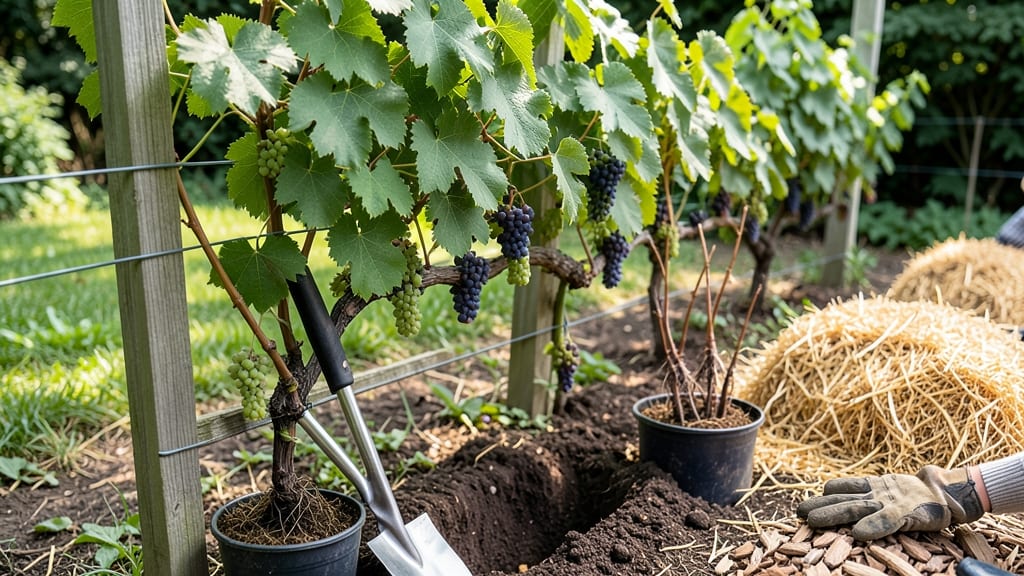
Timing your grapes in Georgia planting window could mean the difference between a thriving vineyard and frost-killed vines. With Georgia’s USDA zones 7b-8a and unpredictable microclimates, getting the schedule right is critical—especially when late frosts can strike as late as mid-February.
Whether you're growing 🍇 Muscadines in the Coastal Plain or Vitis vinifera in the Piedmont, the ideal planting window runs from late winter to early spring.
But here’s the catch: planting too early risks winter damage, while waiting too long means your vines won’t establish strong roots before summer’s brutal heat.
In this guide, I’ll break down the exact frost-free deadlines by region—from North Georgia’s cooler highlands to South Georgia’s sweltering lowlands—so you can plant with confidence.
You’ll also learn how to prep your soil, choose the right varieties for your chill-hour zone, and protect your investment from Georgia’s most common growing pitfalls.
Ready to turn your backyard—or vineyard—into a grape-growing success? Let’s get those vines in the ground at the perfect moment for your corner of the Peach State.
Georgia’s chill-hour zones: matching grapes to your climate region
Georgia’s grape-growing success hinges on chill-hour requirements, which vary dramatically across the state. North Georgia’s mountainous regions (like the Blue Ridge) accumulate 1,000-1,200 chill hours, perfect for Vitis vinifera varieties like Cabernet Sauvignon.
Meanwhile, South Georgia’s Coastal Plain sees only 300-500 chill hours, ideal for heat-loving Muscadines like Scuppernong.
Choosing the wrong grape variety for your chill-hour zone can mean poor fruit set or no harvest at all. For example, French hybrids (like Norton) thrive in Georgia’s 500-800 chill-hour Piedmont region, while Spanish varieties (like Tempranillo) struggle below 1,000 chill hours.
Always check your USDA zone (7b-8a) and local chill-hour data before selecting vines.
Here’s how to match grapes to Georgia’s three key regions:
For North Georgia growers, prioritize Vitis vinifera varieties that need 1,000+ chill hours. In Piedmont regions, French-American hybrids like Norton excel with 500-800 chill hours. Meanwhile, South Georgia’s Muscadines require minimal chill hours but demand well-draining soil to avoid root rot in humid summers.
Pro tip: Use a chill-hour calculator (like the one from UGA Extension) to pinpoint your exact chill accumulation. This ensures you pick grapes that bud out reliably each spring. For example, Chambourcin (600 chill hours) might fail in North Georgia but thrive in Middle Georgia.
Soil type also plays a role. North Georgia’s clay-heavy soils need amendments like compost or sand, while Coastal Plain’s sandy loam benefits from organic matter to retain moisture. Always test your soil’s pH (6.0-6.5 ideal) before planting.
If you’re unsure about your chill-hour zone, check local weather station data or ask your county extension office. They can provide 10-year averages for precise planning. For instance, Dahlonega (USDA Zone 7b) gets ~1,100 chill hours, while Savannah (Zone 8a) sees just ~450.
Remember: Chill hours ≠ frost tolerance. Even in warm zones, late spring frosts can damage new growth. Always plant after your average last frost date (typically mid-March in North Georgia to late February in South Georgia).
For backyard growers, dwarfing rootstocks (like 101-14 Mgt) can help manage vine size in small spaces, regardless of chill hours. These rootstocks also improve disease resistance, a critical factor in Georgia’s humid summers.
🌱
Frost-free deadlines by Georgia region: when to plant for success
Georgia’s frost-free windows vary dramatically from the Blue Ridge Mountains to the Coastal Plain, so timing your grape planting is critical.
In North Georgia (e.g., Dahlonega or Blairsville), last frosts can linger until mid-March, while South Georgia (e.g., Savannah or Valdosta) typically sees frost-free conditions by mid-February. These deadlines ensure your vines establish roots before summer’s heat stress.
For Piedmont growers (e.g., Atlanta or Macon), aim to plant between mid-February and early April. This window balances soil warmth and frost risk—ideal for Vitis vinifera varieties like Cabernet Sauvignon or Chardonnay.
In Coastal Georgia, where winters are milder, late January to early March is your best bet for Muscadine varieties like Scuppernong or Carlos.
Here’s a region-specific breakdown of your planting deadlines, accounting for soil temperature and frost risk:
- 1 North Georgia (Zones 7a-7b): Plant March 1–April 15 to avoid late frosts (avg. last frost: March 15). Ideal for European varieties needing 800+ chill hours.
- 2 Piedmont (Zones 7b-8a): Plant February 15–March 30 (avg. last frost: February 28). Perfect for hybrid varieties like Norton or Cynthiana with 500–800 chill hours.
- 3 Coastal Plain (Zones 8a-8b): Plant January 15–February 28 (avg. last frost: January 31). Best for heat-tolerant Muscadines (300–500 chill hours) or Spanish varieties like Black Spanish.
- 4 Fall Backup Window: Plant September 1–October 15 (for bare-root vines only). Vines need 6–8 weeks to establish roots before winter dormancy. Avoid this in North Georgia due to early frosts.
Soil temperature is just as critical as frost dates. Bare-root vines thrive when soil reaches 50°F, which typically happens by mid-March in North Georgia and early February in Coastal regions.
Use a soil thermometer to confirm—planting too early in cold soil stunts root growth. For container-grown vines, you can plant 2–3 weeks earlier since pots warm faster.
If you miss the spring window, don’t despair—fall planting is possible but riskier. September to mid-October works for bare-root vines in South Georgia, but vines need 6–8 weeks to root before winter.
In North Georgia, frost usually arrives too soon for fall success. Mulch heavily (4–6 inches) to insulate roots if you try this method.
Remember: Muscadines are your safest bet for South Georgia’s heat, while European varieties shine in North Georgia’s cooler climate. Match your variety to your region’s chill hours, and you’ll avoid the heartbreak of winter-killed vines. Now grab those gloves—your grapes are waiting!