
Plants
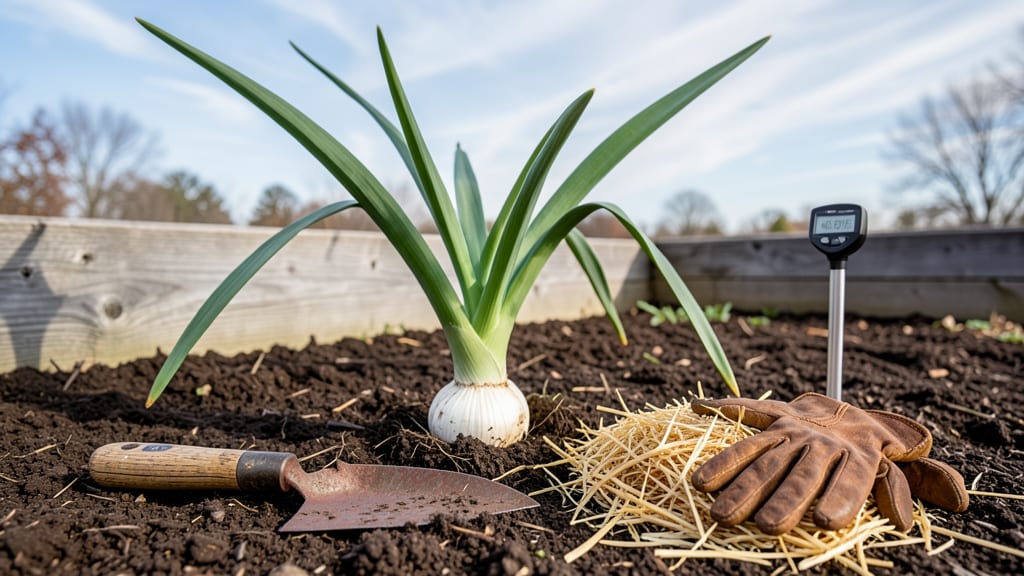
If you've ever wondered when to plant garlic in Minnesota, timing isn't just important—it's everything. That perfect window between crisp autumn air and the first frost can make or break your harvest, especially when dealing with hardneck and softneck varieties that thrive in Minnesota's 4a-5b climate zones.
Most Minnesota gardeners know fall planting is the way to go, but getting it right means planting 🧄 garlic between mid-October and early November.
This timing gives those cloves just enough time to establish roots before winter sets in, setting you up for bulbs that'll be ready to harvest next summer. Skip this window, and you might end up with weak plants or no harvest at all.
What makes this even trickier is that hardneck and softneck garlic have slightly different needs. Hardnecks, the variety that produces those prized scapes, need that early fall planting to develop properly, while softnecks can sometimes tolerate slightly later plantings. But don't wait too long—once the ground freezes, your window closes.
I'll walk you through exactly how to time your planting, what to watch for in Minnesota's unpredictable weather, and how to adjust for late starts. By the end, you'll know the most important steps to guarantee a thriving garlic patch—no guesswork required.
Minnesota garlic planting calendar: hardneck vs softneck timing explained
Minnesota’s short growing season and variable frost dates make garlic planting a precision task. Unlike warmer climates, we can’t plant garlic anytime—fall planting is non-negotiable for hardneck varieties (the best choice for MN), while softneck garlic requires careful timing to avoid winter kill.
Let’s break down the exact windows for both types, plus how to adjust for your specific USDA Zone 4a-5b location.
Hardneck garlic (Allium sativum var. ophioscorodon) thrives in MN’s winters and produces those prized hardneck scapes and larger cloves. Softneck varieties (Allium sativum var. sativum) are more common in milder climates but can work in MN if planted early enough.
The key difference? Cold exposure triggers hardneck garlic to bulb, while softneck varieties need longer growing seasons.
Here’s the critical planting window for Minnesota: mid-October to early November. This gives cloves time to establish roots before the ground freezes but avoids planting too early when soil temperatures may still be warm.
For southern MN (Zone 5b), you can stretch planting into late November, but northern areas (Zone 4a) should finish by October 20th to avoid winter damage.
🌱
| Variety | Best Planting Window (MN) | Soil Temp Requirement | Key Notes |
|---|---|---|---|
| Hardneck Garlic | Mid-October to early November | 40–50°F (4–10°C) | Needs cold vernalization; produces scapes. Best for MN winters. |
| Softneck Garlic | Early September to mid-October | 50–60°F (10–15°C) | More disease-prone in MN; needs earlier start to mature. |
| Both Varieties | 4–6 weeks before ground freezes | Below 40°F (4°C) stunts growth | Use large cloves (1+ inches) for best yields. |
Your local frost dates are the ultimate guide. Check the MN State Climatology Office for your area’s average first hard frost (usually October 10–20 in most of MN). Plant garlic 4–6 weeks before this date—so if your frost hits October 15th, aim for September 15th–October 1st.
Pro tip: Use a soil thermometer to confirm temps are below 50°F (10°C) before planting.
For soil preparation, focus on well-draining, loose soil with a pH of 6.0–7.0. Work in 2–3 inches of compost and a light fertilizer (5-10-10) at planting.
Avoid fresh manure—it can burn cloves and attract pests. Hardneck garlic prefers sandy loam, while softneck does better in richer, moisture-retentive soil.
When selecting cloves, choose large, plump bulbs with tight skins and no sprouts. Break apart bulbs just before planting—never store separated cloves as they’ll dry out.
Plant pointy-end up, 2 inches deep, and 4–6 inches apart in rows 12 inches apart. This spacing prevents disease spread and makes harvesting easier.
Mulching is non-negotiable in MN. Apply 4–6 inches of straw or leaves after planting to insulate cloves from freeze-thaw cycles. Remove mulch in early spring (March) to allow soil to warm and shoots to emerge.
Without proper mulch, cloves can heave out of the ground during winter, reducing yields by up to 50%.
Spring planting is possible but risky in MN. If you miss the fall window, you can try planting in early spring (March–April), but yields will be smaller and less flavorful.
Spring-planted garlic needs extra care, including heavier mulching and consistent watering to compensate for the shorter growing season.
🌿
5 Critical factors that determine your garlic planting success in MN
When it comes to planting garlic in Minnesota, the last frost date is your most important guide. Most regions experience their first hard frost between mid-October and early November, so aim to plant garlic 4-6 weeks before that date.
For example, if your frost hits November 10th, plant between October 10th and October 25th for optimal root establishment.
Hardneck varieties like 'German White' or 'Chesnok Red' need this precise timing—they rely on cold vernalization to form bulbs. Softnecks like 'Silverskin' are slightly more forgiving but still thrive with early fall planting. Missing this window means weak plants or no harvest next summer.
Soil temperature matters just as much as frost dates. Garlic cloves need 40-50°F soil to sprout, which typically occurs in late September to early October in Minnesota. Use a soil thermometer to confirm—planting too early in warm soil can cause premature sprouting and rot.
🌡️ Soil Temperature
Plant when soil reaches 40-50°F—typically late September in MN.
❄️ Frost Timing
Plant 4-6 weeks before first hard frost (usually mid-October).
🧄 Clove Size
Choose large cloves (1-2 inches) for biggest bulbs—small cloves yield tiny harvests.
🌱 Variety Choice
Hardnecks need cold vernalization; softnecks tolerate slight delays.
🌧️ Weather Risks
Avoid planting if rain is forecasted—soil should be crumbly, not muddy.
Clove size directly impacts your harvest. Always select large, plump cloves (1-2 inches) from the outer bulb—they'll produce the biggest bulbs next summer. Smaller cloves yield tiny harvests, and peeling or damaged cloves are more prone to rot. Break apart bulbs just before planting to avoid drying.
Minnesota's regional climate variations add another layer. Southern counties (like USDA Zone 5b) can plant slightly later, while northern areas (like Zone 4a) need to start earlier. Check your local frost dates and adjust—planting too late in colder zones risks frozen cloves before rooting.
Finally, watch the weather forecast. Planting during prolonged rain compacts soil and can rot cloves. Aim for dry, cool days when soil is workable but not soggy. If your ideal window passes, consider late fall planting with extra mulch—just be prepared for smaller yields.