
Trees
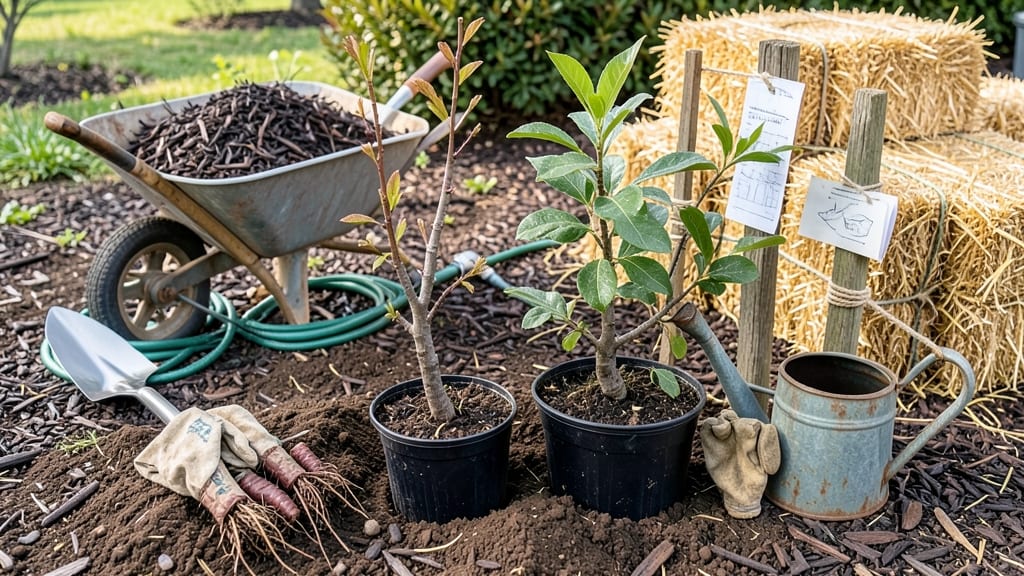
Timing your fruit tree planting in Central Texas isn't just about picking a month—it's about avoiding the brutal summer heat and giving those roots the best shot at survival.
With USDA Zones 8a-8b bringing mild winters and scorching summers, planting too early or late can mean the difference between a thriving orchard and a sad, wilted sapling.
Most gardeners here swear by late winter to early spring as the sweet spot, but there's more to it than just calendar dates.
You'll want to factor in soil temperatures, frost risks, and even the type of fruit tree you're planting—because a peach tree's needs aren't the same as a citrus sapling's. Let me break down exactly when to dig in for the best results.
The key is planting 4-6 weeks before your last frost date—typically around February to March—when the soil has warmed enough to encourage strong root growth.
This timing gives your 🍎 fruit tree time to establish itself before the summer heat kicks in, setting the stage for years of bountiful harvests.
Whether you're dreaming of juicy peaches or sweet figs, getting the timing right is the first step to success. I'll walk you through the best practices, so you can avoid common mistakes and give your trees the perfect start in Central Texas' unique climate.
Optimal planting windows for Central Texas fruit trees by variety
Central Texas' USDA Zones 8a-9a offer a unique growing window for fruit trees, where timing is everything. Unlike northern climates, we don't face harsh winters, but our scorching summers (100°F+) demand strategic planting to establish roots before heat stress hits.
The ideal window spans late winter through early spring, aligning with natural rainfall patterns and avoiding summer drought.
Most fruit trees benefit from being planted 4-6 weeks before the last frost date (typically around March 15 in Central Texas). This gives roots time to establish before summer heat arrives. However, some varieties like figs and pomegranates are more heat-tolerant and can handle late spring planting with extra care.
Here's a breakdown of optimal planting times by variety, accounting for Central Texas' climate quirks:
| Variety | Optimal Planting Window | Key Consideration | Notes |
|---|---|---|---|
| Peaches | Late Feb - Early Mar | 300+ chill hours | 'Oso Grande' handles heat well |
| Plums | Late Feb - Mid Mar | 400+ chill hours | 'Santa Rosa' thrives here |
| Figs | Feb - May | Heat-tolerant | 'Celeste' bears twice yearly |
| Pomegranates | Feb - Apr | Drought-resistant | 'Wonderful' handles poor soil |
| Citrus (Oranges) | Feb - Mar | Frost-sensitive | 'Valencia' needs protection |
| Persimmons | Late Feb - Early Mar | Slow to establish | 'Fuyu' bears reliably |
For bare-root trees, plant immediately upon arrival to prevent root desiccation. Container-grown trees offer more flexibility and can be planted through May, but require extra watering during establishment. The key is getting roots down before summer's 100°F+ temperatures stress young plants.
Central Texas' variable rainfall makes soil moisture critical. After planting, maintain consistent moisture in the root zone (first 12-18 inches) for the first 60-90 days. Mulch heavily with 2-3 inches of organic mulch to retain moisture and regulate soil temperature.
While spring planting is ideal, fall planting (October-November) works for some varieties like figs and pomegranates, giving roots time to establish before winter. However, avoid planting in extreme heat (June-August)—transplant shock becomes deadly when temperatures exceed 95°F for prolonged periods.
Pro tip: Use mycorrhizal fungi at planting time to boost root development in Central Texas' often clay-heavy soils. These beneficial fungi form symbiotic relationships with tree roots, improving water and nutrient uptake during critical establishment phases.
Remember that Central Texas' microclimates vary dramatically. Urban areas like Austin may experience 2-3°F cooler temperatures than rural areas, while west Texas can be 5°F hotter. Adjust your planting window accordingly—plant 1-2 weeks earlier in cooler microclimates and 1-2 weeks later in hotter zones.
🌱
How to adjust planting for Central Texas' extreme heat and drought conditions
Central Texas' 100°F+ summers and drought-prone soil demand special care when planting fruit trees. Unlike cooler climates, your trees need extra protection during their first critical months to establish roots before the heat sets in. Without proper adjustments, even healthy saplings can suffer transplant shock or root rot.
Start by amending your clay-heavy soil with organic matter like compost or aged manure. This improves drainage while retaining moisture—a must for Central Texas' low rainfall during summer. Aim for a 6-inch deep amended zone around the planting hole to give roots a head start.
🌱 Pro Tip: Test your soil's pH (ideal range: 6.0-7.0 for most fruit trees). Central Texas soil often leans alkaline, which can lock out nutrients. Adjust with sulfur or peat moss if needed.
⚠️ CRITICAL WARNING: Avoid Planting in Summer Heat
Planting fruit trees in June-August is a common mistake that leads to 90% transplant failure in Central Texas. The intense heat causes:
- ✖️ Root desiccation from exposed soil
- ✖️ Fungal infections from overhead watering
- ✖️ Stunted growth due to heat stress
Solution: Wait until late February-March when soil temps are 55-65°F—perfect for root establishment before summer arrives.
Once planted, mulch heavily (3-4 inches of wood chips or straw) to lock in moisture and regulate soil temperature. Keep mulch 6 inches away from the trunk to prevent rot. For container-grown trees, use self-watering pots with drip irrigation to maintain consistent moisture.
During the first 60 days after planting, water deeply 2-3 times per week (1-2 gallons per watering for small trees). Shift to weekly deep waterings once established, but never let soil dry out completely—Central Texas' caliche layer makes deep watering essential.
For heat-sensitive varieties like peaches or plums, provide shade cloth (30-50%) during the first summer. Remove it in fall to harden off the tree. Native varieties like Texas persimmon or Everbearing peach handle heat better but still need proper watering.
💧 Remember: The key to success in Central Texas is preparing soil, timing planting, and managing water—not just choosing the right variety. With these adjustments, your fruit trees will thrive despite the brutal summers and unpredictable rains.